Flow profiling is a way to vary water flow—or the pressure that drives it—during an espresso shot instead of using one steady setting from start to finish. It can give you more control over extraction, but it is not a shortcut to better espresso. For most home users, it makes sense as a later upgrade, once grind, dose, and puck preparation are consistent.
How They Work · Sat Sep 19
Flow profiling as a later upgrade path
Flow profiling can change how water reaches the coffee during a shot, but it is most useful after you can pull repeatable espresso. Here’s how to think about it as a later upgrade.
What flow profiling changes
A conventional espresso shot usually runs with a relatively steady pump setting after the machine reaches brewing conditions. A profiling-capable machine or add-on lets you change the flow or pressure at different points in the shot. For example, a barista might use a gentler start to wet the coffee bed, then increase the flow, or reduce it near the end.
Flow rate and pressure are related, but they are not interchangeable terms. Pressure is the force pushing water through the coffee; flow is how quickly water moves. The coffee puck affects both. Machine controls and manufacturers may also use “flow profiling” and “pressure profiling” differently, so check what a particular machine actually measures or adjusts.
The goal is not to follow one universal profile. Different coffees, roasts, baskets, and puck preparations can respond differently. Profiling gives you another variable to explore; it also makes it easier to change several things at once and lose track of what improved or worsened a shot.
Add-on control for a compatible machine
 OWHGJTED Compatible for Mischief E61 Flow Control Device, Adjustable Stainless Steel Profil Valve Kit for…OWHGJTED
$35.48 as of
View on Amazon OWHGJTED Compatible for Mischief E61 Flow Control Device, Adjustable Stainless Steel Profil Valve Kit for…OWHGJTED
$29.73 as of
View on Amazon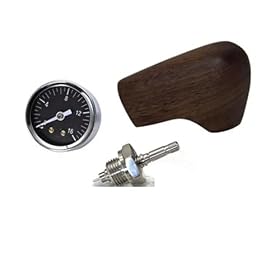 OWHGJTED Compatible for Mischief E61 Flow Control Device, Adjustable Stainless Steel Profil Valve Kit for…OWHGJTED
$170.63 as of
View on Amazon
Product prices and availability are accurate as of the date/time indicated and are subject to change. Any price and availability information displayed on Amazon.com at the time of purchase will apply to the purchase of this product.
Build a repeatable baseline first
Before adding profiling, aim to make a simple shot reliably. Keep the coffee dose and yield consistent, use a grinder that can make small adjustments, and distribute and tamp the grounds consistently. Change one variable at a time and keep notes about the result.
If shots vary widely from one attempt to the next, flow profiling can make diagnosis harder. A machine with steady operation and a capable grinder is often a more useful first investment than extra controls. You do not need a perfect technique before experimenting, but a repeatable baseline helps you tell whether a profile is making a meaningful difference.
A machine with profiling controls
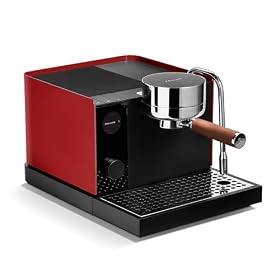 Fellow Espresso Series 1, Home Espresso Machine, Pressure ProfilingFellow
$1,599.95 as of
View on Amazon Fellow Espresso Series 1 - Espresso Machine, Pressure ProfilingFellow
$1,599.95 as of
View on Amazon Diletta Alto Espresso Machine with Flow Control | Dual Boiler | PID | Shot Timer…Diletta
$2,699.00 as of
View on Amazon
Product prices and availability are accurate as of the date/time indicated and are subject to change. Any price and availability information displayed on Amazon.com at the time of purchase will apply to the purchase of this product.
Three ways to add profiling later
Use a feature already on the machine
Some espresso machines offer adjustable flow or pressure controls, manual paddles, or programmable profiles. If you already own one, start with its manual and learn what each control changes. Follow the manufacturer’s instructions for setup, operation, and cleaning; do not assume that a control labeled “flow” works the same way across machines.
Add a compatible flow-control device
Some machines can accept an aftermarket flow-control device. These are not universal accessories: compatibility can depend on the grouphead design and the machine’s configuration. Confirm compatibility with the device maker or a qualified espresso-machine technician before buying. Installation may involve opening or modifying parts of the machine, so follow the manufacturer’s instructions and use a technician if the work is outside your comfort level.
An add-on is most sensible when you like your machine, it is explicitly compatible, and you want to experiment without replacing the whole setup. It may not provide the same range of control or automation as a machine designed for profiling.
Choose a profiling-capable machine at your next replacement
If you are already planning to replace your machine, profiling can be a useful feature to include in your search. Compare the specific controls and workflow, not just the label: Is adjustment manual or programmable? Can you see pressure or flow information? Can you repeat a saved profile? Also consider warm-up, maintenance, counter space, and how you make milk drinks. A feature you rarely use may not justify a more complex machine.
How to decide whether it is worth it
Flow profiling is a reasonable next step if you enjoy dialing in coffee, can already produce repeatable shots, and want to explore how different coffees respond to changes during extraction. It may be a poor fit if you mainly want a simple, consistent workflow or are still working through grinder and puck-preparation issues.
Try changing one part of the shot at a time and record the coffee, grind setting, dose, yield, and profile. If the result gets worse, return to your baseline rather than changing multiple settings to compensate. Profiling is an optional tool—not a requirement for making good espresso at home.
Check compatibility before buying an upgrade
For an add-on, confirm the exact machine and grouphead compatibility, whether installation is required, and whether fitting it affects the machine’s warranty. Ask the manufacturer or a qualified technician if the documentation is unclear. If no compatible device is available, waiting until you replace the machine is usually safer and simpler than attempting an improvised modification.
FAQ
Is flow profiling the same as pressure profiling?
Not always. Flow is the rate water moves, while pressure is the force driving it through the coffee. They affect one another, but machine controls may adjust or report different things. Check the manufacturer’s description of the specific machine or device.
Do I need flow profiling to make good espresso?
No. A capable grinder, consistent puck preparation, and repeatable dose and yield are more important foundations for most home users. Profiling is an optional way to experiment once those basics are reasonably steady.
Can I add flow control to any espresso machine?
No. Aftermarket devices are machine- and grouphead-specific. Verify exact compatibility with the device manufacturer or a qualified technician, and follow the machine’s warranty and installation guidance.