An espresso machine review is most useful when it explains the conditions behind its results. Look for details about the grinder, beans, basket, warm-up, repeat shots, milk steaming, and maintenance—not just a star rating or a list of features. Those details help you judge whether the results are likely to match your kitchen and routine.
Reviews · Wed Sep 16
How to read an espresso machine review
A useful espresso machine review explains how the machine was set up, what it can consistently do, and where its limits show up in everyday use.
Check how the machine was set up
Before comparing shot quality, find out how the reviewer prepared the machine. Espresso depends on more than the machine itself, so results can change with the grinder, coffee, dose, basket, and settings.
Look for answers to these questions:
- Was a separate grinder used, or does the machine have a built-in one?
- Did the reviewer use the included basket and portafilter, or different accessories?
- Were grind size, dose, and extraction adjusted to suit the coffee?
- Did the review try more than one shot, rather than relying on a single result?
- Were the beans fresh, and does the reviewer say what coffee was used?
If those details are missing, treat precise claims about shot quality cautiously. A poor shot may reflect the setup or technique, while a carefully dialed-in shot may not represent what a beginner will get right away.
Compare home espresso machines
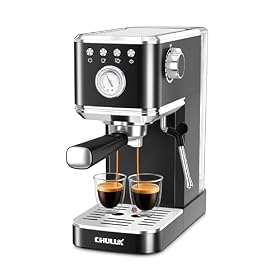 CHULUX Slim Espresso Machine with Milk Frother for Home Cappuccino, BlackCHULUX
$109.99 as of
View on Amazon Spacekey Espresso Machine with Milk Frother, 20 Bar Compact Expresso Coffee Machines for Home, Stainless…Spacekey
$69.99 as of
View on Amazon
Product prices and availability are accurate as of the date/time indicated and are subject to change. Any price and availability information displayed on Amazon.com at the time of purchase will apply to the purchase of this product.
Separate useful performance evidence from headline specs
Specifications can narrow your choices, but they do not tell the whole story. Reviews should explain how a feature affects the coffee-making routine rather than assuming that a larger number or added feature guarantees better espresso.
Pressure and temperature
A pressure gauge can show what is happening during extraction, but seeing a particular pressure reading does not by itself prove that a machine makes better-tasting espresso. Consider whether the reviewer describes repeatable shots and flavor, not just the gauge.
Temperature controls such as a PID can make adjustment more precise on machines that offer them. Still, the label alone does not establish how stable the temperature is at the group or how consistently the machine performs. Look for an explanation of the reviewer's method and results.
Heating system and warm-up
Reviews may describe a machine as having a single boiler, dual boiler, or thermoblock heating system. The practical question is how it fits your routine: how long it takes to be ready, whether you can brew and steam at the same time, and how long you wait between tasks. Check whether warm-up time was measured from a cold start and whether the reviewer included time for the portafilter to heat.
Built-in grinder and included accessories
A built-in grinder may save counter space, but the review should explain how easy it is to adjust and whether it can produce a grind fine enough for the coffee being used. With a machine that does not include a grinder, remember that the grinder is part of the setup and can strongly affect results.
Also check what comes in the box. Basket type and size, a usable tamper, and the portafilter can affect setup and the cost of getting started. Confirm that any accessories you plan to buy fit the specific machine.
Find a grinder for a separate-machine setup
 SHARDOR Electric Burr Coffee Grinder 2.0, Automatic Coffee Bean Grinder for Home Use, Adjustable Burr…SHARDOR
$39.99 as of
View on Amazon AMZCHEF Espresso Machine With Grinder, Temp Control, 44 Grind SettingsAMZCHEF
$189.99 as of
View on Amazon SHARDOR Conical Burr Espresso Coffee Grinder Electric with Precision Timer 2.0, Touchscreen Adjustable Burr Mill…SHARDOR
$71.99 as of
View on Amazon
Product prices and availability are accurate as of the date/time indicated and are subject to change. Any price and availability information displayed on Amazon.com at the time of purchase will apply to the purchase of this product.
Look for everyday workflow tests
A review should cover more than whether the machine can pull one good shot. Pay attention to the steps that happen before and after brewing: filling the tank, locking in the portafilter, cleaning the basket, emptying the drip tray, and accessing controls.
For milk drinks, look for observations about steam power, how easy the wand is to position, and whether it is manageable for a beginner. A review that describes the time and steps between brewing and steaming is more useful than a vague claim that a machine is “fast.”
If counter space matters, check the machine's stated dimensions and whether the reviewer considered room for the water tank, cup height, and access to the controls. These details can determine whether the machine fits your kitchen in practice.
Evaluate the reviewer's evidence and limitations
Prefer reviews that distinguish direct observations from manufacturer claims and explain how the machine was evaluated. Useful evidence includes repeatability, clear descriptions of the method, and specific examples of what was easy or frustrating.
Check whether the reviewer discloses a loaned or supplied machine, affiliate links, or other commercial relationships. A disclosure does not automatically make a review unreliable, but it helps you understand the context. Also look for the length of ownership: a short evaluation can assess setup and basic operation, but it cannot establish years of durability.
Be cautious when a review gives a confident verdict without explaining who the machine suits. A compact entry-level machine and a higher-control model may serve different needs; a single ranking can hide those tradeoffs.
Match the verdict to your routine
Before buying, use the review to answer a few practical questions:
- Can the machine make the drinks you actually want, including milk drinks if relevant?
- Does it fit your counter and the time you want to spend making coffee?
- Will you need a separate grinder or other accessories, and are they compatible?
- Does the review show repeatable results with a setup you can reasonably reproduce?
- Are the maintenance tasks and likely limitations acceptable to you?
A strong review does not have to declare one machine best for everyone. It should make clear who is likely to appreciate the machine, what compromises come with it, and what information remains uncertain.
FAQ
Should I trust an espresso machine review that only shows one shot?
Treat it as limited evidence. One shot can show basic operation, but repeated shots and an explanation of the grinder, coffee, and adjustments make performance claims more useful.
Does a pressure gauge mean an espresso machine makes better coffee?
No. A gauge can help show pressure during extraction, but the reading alone does not establish shot quality. Look for repeatable results and an explanation of how the reviewer evaluated the coffee.
How important is the grinder when reading a machine review?
Very important. Grind size affects extraction, so check what grinder the reviewer used and whether the review explains the coffee and adjustments. If you buy a machine without a built-in grinder, include a suitable grinder in your setup.
Can a short-term review tell me whether an espresso machine will last?
Not reliably. A short review can cover setup, workflow, and early performance, but long-term durability requires extended ownership evidence. Check warranty terms and manufacturer maintenance guidance as well.