Water Hardness and Espresso Machines: What to Know
Hard water can leave mineral scale inside an espresso machine, but very soft or unsuitable water can cause other problems. Test your water and follow your machine maker’s guidance before choosing a filter or descaler.
What water hardness means
Water hardness mainly refers to dissolved calcium and magnesium. As water heats, some of these minerals can form scale inside an espresso machine’s boiler, thermoblock, and water passages. Scale can reduce heating and water flow, and may eventually contribute to faults.
Hardness is often reported as parts per million (ppm) of calcium carbonate or grains per gallon (gpg). One gpg is about 17.1 ppm. Your local water report can give a starting point, but the water at your tap may differ if it passes through a household treatment system.
Hardness is not the only part of water chemistry that matters. Alkalinity also affects scale formation, while water that is too low in minerals may not be suitable for some machines. Follow the water specifications in your espresso machine’s manual rather than aiming for the softest possible water.
Product prices and availability are accurate as of the date/time indicated and are subject to change. Any price and availability information displayed on Amazon.com at the time of purchase will apply to the purchase of this product.
How to check your water
Check the manual first. Look for the machine maker’s water recommendations, including any limits or approved treatment methods.
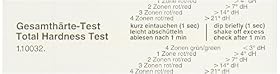
Get a baseline. Review your water utility’s report or use a water-hardness test strip or kit. If you have a softener, test the water from the tap you use to fill the machine.
Check the result against the machine’s guidance. A test strip can help identify general hardness, but it may not measure every property the machine maker specifies. Contact the manufacturer if the result is unclear.
Retest when your water source changes. Seasonal changes, a new filter, or changes to household treatment can alter the water going into the machine.
Product prices and availability are accurate as of the date/time indicated and are subject to change. Any price and availability information displayed on Amazon.com at the time of purchase will apply to the purchase of this product.
Choosing water treatment
An espresso-machine water filter or softening cartridge can reduce scale risk when it is compatible with your machine and matched to your water. Check the cartridge’s replacement schedule and whether it treats the specific water conditions you have. A filter does not necessarily remove all hardness, so continue following the manufacturer’s maintenance instructions.
Do not assume distilled or reverse-osmosis water is suitable on its own. Water with very little mineral content may fall outside a machine’s requirements or interfere with how some machines operate. Use it only if the manufacturer allows it, or with a remineralization method specifically approved for the machine.
If your water is very hard, a compatible treatment system may be more useful than relying on frequent descaling alone. If you cannot confirm that a treatment method is suitable, ask the machine maker or a qualified service provider before using it.
Product prices and availability are accurate as of the date/time indicated and are subject to change. Any price and availability information displayed on Amazon.com at the time of purchase will apply to the purchase of this product.
Descaling without guesswork
Descaling removes mineral deposits; it does not replace filtration or make unsuitable water appropriate. Use only the descaler and procedure approved for your machine. Some machines have specific cleaning cycles, and some manufacturers advise against user descaling because the process can move deposits or cause damage.
Do not choose a descaling schedule based only on a generic calendar. Follow the machine’s indicator and manual, taking your water hardness and usage into account. If the machine has persistent low flow, unusual heating behavior, or a warning that remains after the prescribed maintenance, stop repeating the descaling cycle and contact the manufacturer or a service professional.
Practical takeaway
Test the water you actually put in the machine, compare it with the manual, and use a compatible filter or treatment if needed. Descale only as directed. That approach helps limit scale without assuming that very soft or mineral-free water is best for every espresso machine.
FAQ
Does hard water damage an espresso machine?
Hard water can leave mineral scale in heated parts and water passages. The risk depends on the water’s composition, machine design, and maintenance, so follow the machine maker’s water and descaling guidance.
Can I use bottled water in my espresso machine?
Possibly, but bottled water varies in mineral content. Check its label if available and compare it with the machine’s water requirements; do not assume that any bottled or distilled water is suitable.
Will a water filter stop scale completely?
Not necessarily. A compatible filter may reduce scale-forming minerals, but its effectiveness depends on the filter, the water, and timely cartridge replacement. Keep following the machine’s maintenance instructions.
How often should I descale my espresso machine?
Use the interval or indicator specified by the manufacturer, taking your water conditions and usage into account. Avoid a generic schedule if it conflicts with the machine’s instructions.