The best espresso machine for someone who will not steam milk is usually a compact machine focused on brewing espresso, with no need to pay extra for powerful steaming performance. Decide first whether you want ground coffee, built-in grinding, pods, or the convenience of a super-automatic system.
If you will not steam milk, you do not need to prioritize steam-wand power, rapid milk heating, or dual-boiler performance. Look instead for a machine with dependable espresso brewing, a workflow you will actually enjoy, and enough control over grind size and dose to make good black coffee.
For many people, the best fit is a compact semi-automatic espresso machine paired with a separate burr grinder. If convenience matters more than control, a super-automatic machine can be easier. A pod or capsule machine is the simplest option, but it gives you less control over freshness and extraction.
What to prioritize when you will not steam milk
Brewing performance
Look for a machine designed primarily around espresso brewing rather than one marketed mainly for fast milk drinks. Useful features can include stable brew temperature, a properly sized portafilter, adjustable brew settings, and the ability to use freshly ground coffee.
Pressure claims alone do not tell you how good the espresso will be. Grind quality, dose, tamping, water, and temperature stability all affect the cup. A machine with extensive pressure marketing is not automatically a better choice than a simpler model with a good brewing workflow.
A good grinder—or room for one
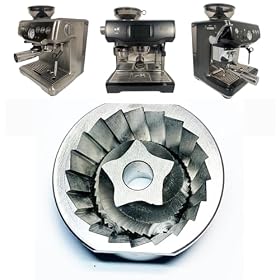
The grinder often matters more than extra steam capability. If you buy a semi-automatic machine, budget space and money for a burr grinder with enough adjustment range for espresso. A grinder that cannot make fine, consistent adjustments can make dialing in difficult, even with a capable machine.
A built-in grinder saves counter space and reduces the number of separate appliances, but it can be less flexible to clean, repair, or replace. Check whether the grind setting, dose, and burr access are adjustable before choosing an all-in-one machine.
Simple controls
If you drink straight espresso, you may not need a large touchscreen, milk programs, or several specialty drink presets. Simple controls can make it easier to understand the important variables: grind, dose, shot volume, and brew time.
Programmable shot volume is convenient, but it does not replace dialing in the coffee. You may still need to adjust the grind or dose when you change beans.
Size and warm-up time
A machine without a strong steaming system may be smaller and simpler, but check its actual footprint. Measure the counter depth, the space needed to remove the water tank, and the clearance above the machine for filling beans or water.
Warm-up behavior also matters. Some machines heat quickly but need additional time for the group head and portafilter to stabilize. Follow the manufacturer’s instructions rather than assuming that a ready light means every part of the machine is fully warmed.
Which type of machine is the best fit?
Compact semi-automatic machine: best for control
Choose a semi-automatic machine if you want to use fresh coffee, adjust your recipe, and learn the basic espresso workflow. You will need to grind, dose, tamp, lock in the portafilter, start the shot, and clean afterward.
This is usually the strongest choice for someone who wants better control without paying for milk-focused hardware. The tradeoff is that the grinder is often separate, and results depend on your technique.
Super-automatic machine: best for convenience
A super-automatic machine grinds and brews with fewer manual steps. It can be a good choice if you want a button-operated black coffee and do not want to manage a portafilter.
Check whether the machine allows useful adjustments such as grind size, coffee dose, drink volume, and brew temperature. Also consider the cleaning routine. Convenience during brewing does not mean maintenance-free operation; brew groups, grounds containers, drip trays, and milk components—if included—still require care.
Capsule machine: best for the simplest routine
A capsule machine is worth considering if consistency and minimal cleanup matter more than using freshly ground beans. It usually has a small footprint and a short learning curve.
The drawbacks are ongoing capsule purchases, less control over the coffee, and more packaging waste depending on the capsule system. Check capsule availability and recycling instructions before committing to a format.
Lever or manual machine: best for hands-on preparation
A manual or lever machine can suit someone who enjoys the ritual and wants a compact setup. It is not automatically easier, however. Pressure and shot timing may require more attention, and some models still include steam equipment even if you never use it.
Choose this style only if the hands-on process is part of the appeal. For a fast morning espresso, a semi-automatic or super-automatic machine is usually more practical.
Compact semi-automatic espresso machine for black coffee
Product prices and availability are accurate as of the date/time indicated and are subject to change. Any price and availability information displayed on Amazon.com at the time of purchase will apply to the purchase of this product.
Features you probably do not need
If you will never steam milk, these features should not drive your decision:
A large steam boiler
Very high steam power
Dual-boiler or heat-exchanger capacity intended for making several milk drinks
Automatic milk containers
Multiple milk-drink presets
A large steam wand designed for café-style milk texture
These features can still be included on a suitable machine, but they may add cost, size, heat-up time, and cleaning work without improving your black espresso.
Product prices and availability are accurate as of the date/time indicated and are subject to change. Any price and availability information displayed on Amazon.com at the time of purchase will apply to the purchase of this product.
A practical buying checklist
Before choosing, answer these questions:
Do you want whole beans, pre-ground coffee, or capsules? Whole beans require a grinder; capsules simplify the routine but limit coffee choice.
Do you want control or convenience? Choose semi-automatic for control and super-automatic for fewer manual steps.
How much counter space is available? Measure depth as well as width, including room to fill the tank and remove the drip tray.
Will you make one shot or several in succession? Check the manufacturer’s guidance for recovery and consecutive brewing.
How easy are the removable parts to clean? A machine that is difficult to maintain may become frustrating even if it makes good espresso.
Can you get replacement parts and accessories? Confirm filter, gasket, basket, and cleaning-product availability for the specific machine.
Super-automatic machine for espresso and black coffee
Product prices and availability are accurate as of the date/time indicated and are subject to change. Any price and availability information displayed on Amazon.com at the time of purchase will apply to the purchase of this product.
The grinder decision
If you choose a semi-automatic machine, a separate espresso-capable burr grinder is usually the most important companion purchase. Look for fine adjustment steps, a stable dosing method, and a design that does not make retention and cleaning unnecessarily difficult.
Avoid assuming that a grinder marketed for drip coffee will also be suitable for espresso. Espresso typically needs a much finer and more precise grind range. If you prefer not to buy or adjust a grinder, a super-automatic or capsule machine may better match your routine.
Product prices and availability are accurate as of the date/time indicated and are subject to change. Any price and availability information displayed on Amazon.com at the time of purchase will apply to the purchase of this product.
How to keep a black-espresso setup simple
Use fresh water, empty the drip tray and grounds container regularly, and wipe the portafilter and group area after brewing. Backflushing and descaling schedules vary by machine, water hardness, and manufacturer instructions, so follow the owner’s manual.
Do not leave old coffee grounds in the portafilter or allow coffee oils to build up on the basket. If the machine has a water filter, replace it according to the stated schedule rather than treating it as permanent.
Bottom line
For most people who will not steam milk, choose a compact semi-automatic espresso machine with a separate burr grinder if you want control over fresh coffee. Choose a super-automatic machine if pressing a button matters more than hands-on preparation, or a capsule machine if minimum cleanup is the top priority.
Do not pay extra for steam capacity you will never use. Put that budget toward the grinder, brewing consistency, water quality, ease of cleaning, and a size that fits your kitchen.
FAQ
Do I need an espresso machine with a steam wand if I only drink black coffee?
No. A steam wand is only necessary for frothing and texturing milk. You can choose a machine with one and ignore it, but a model with less emphasis on steaming may be smaller, simpler, or less expensive.
Is a super-automatic espresso machine good for black coffee?
It can be a good fit if you want coffee made with minimal manual work. Look for adjustable grind, dose, temperature, and drink-volume settings, and make sure you are comfortable with the cleaning routine.
Should I buy a grinder separately?
A separate espresso-capable burr grinder is usually the better choice when you want control and fresh coffee. A built-in grinder saves space, while a capsule or super-automatic machine may be better if you do not want to manage grinding.
Are single-boiler espresso machines suitable if I never steam milk?
Yes. If you only brew espresso, you do not need to wait for a machine to switch between brewing and steaming. Focus on brew temperature behavior, warm-up instructions, workflow, and maintenance rather than steam performance.
What is the easiest espresso setup for someone who does not want to steam milk?
A capsule machine is generally the simplest to operate and clean. A super-automatic machine offers freshly ground coffee with fewer manual steps, while a semi-automatic machine provides more control but requires a separate grinder and more preparation.