A realistic espresso budget should cover both the machine and the grinder—not just the machine shown in the product listing. For most home setups, it is better to pair a simpler espresso machine with a capable espresso grinder than to overspend on the machine and use an unsuitable grinder. Plan for the grinder, basic accessories, and routine supplies before deciding which machine fits your budget.
Grind & Dose · Mon Sep 07
Budget for a machine plus a grinder
A home espresso setup is a two-part purchase: the machine makes the coffee, but the grinder largely determines how consistently you can dial it in. Use this guide to divide your budget, avoid false savings, and account for essential accessories.
What do you need help with?
Open an answer, or tell us what we should cover next.
Answered in this guide
Set a complete budget for an espresso machine and grinder
Treat the purchase as a complete espresso system: machine, grinder, and essential extras. Include accessories, water, and cleaning costs so the initial budget reflects what you actually need to start making espresso.
Choose grinder features worth paying for
Prioritize fine grind adjustments, consistent particle size, suitable espresso settings, and manageable dose retention. These features make it easier to correct shots that run too quickly or too slowly.
Choose machine features for milk drinks and daily use
Compare machines by their brewing and steaming workflow, temperature control, portafilter setup, warm-up time, and daily convenience. Milk-drink drinkers should pay particular attention to how the machine steams milk.
Budget for the accessories an espresso setup needs
Reserve money for the supporting items that make the setup usable, along with water and cleaning needs. Leaving these out can make an apparently affordable machine-and-grinder purchase cost more than expected.
Need something else?
Request a topic and help us choose what to build next.
Dial in the grinder after buying the setup
Diagnose whether poor shots come from the grinder or machine
Choose a grinder model to pair with the machineRead this guide →
Requests help us prioritize the next guide. No email required.
One anonymous request per topic.
Start with the total setup cost
Think of the purchase as an espresso system with three parts:
- Espresso machine: Controls water delivery, brewing temperature, and milk steaming.
- Espresso grinder: Produces the fine, consistent grounds needed for proper extraction.
- Accessories and supplies: Include a tamper, scale, knock box, cleaning supplies, and possibly a water filter or pitcher.
The machine and grinder do not need to cost the same, but both should be appropriate for your intended drinks and frequency of use. A machine with advanced features cannot compensate for grounds that are inconsistent, stale, or poorly adjusted.
Espresso machine for a complete home setup
 CASABREWS 3700 Essential Stainless Steel Espresso Machine with Steam WandCASABREWS
$98.99 as of
View on Amazon RIOSKY Stainless Steel Espresso Machine with Powerful Steam WandRIOSKY
$99.99 as of
View on Amazon BYESHOP 20 Bar Compact Espresso Coffee Machines with Milk Frother for HomeBYESHOP
$99.99 as of
View on Amazon
Product prices and availability are accurate as of the date/time indicated and are subject to change. Any price and availability information displayed on Amazon.com at the time of purchase will apply to the purchase of this product.
How to divide the budget
A practical starting point is to give the grinder a meaningful share of the setup budget rather than treating it as an afterthought. The exact split depends on your priorities:
- Mostly straight espresso: Put more emphasis on grinder adjustment range, repeatability, and dose consistency.
- Mostly milk drinks: A capable grinder still matters, but you may prefer to allocate more toward a machine with convenient steaming and recovery.
- Occasional use: A simpler machine and grinder may make more sense than paying for features you rarely use.
- Frequent drinks or multiple users: Spend more on consistency, warm-up convenience, durability, and workflow.
Avoid choosing a machine first and spending whatever remains on the grinder. Decide on a minimum grinder standard before comparing machines. If the grinder cannot make suitable espresso-fine adjustments, the machine will be difficult to use well regardless of its other features.
Espresso grinder to pair with a home machine
 KIDISLE Conical Burr Coffee Grinder Electric, Espresso Grinder for Home Use, Burr Mill with 51…KIDISLE
$56.99 as of
View on Amazon SHARDOR Electric Coffee Grinder, 70g Large Capacity Spice Grinder with Visual Timing Knob for Precise…SHARDOR
$26.99 as of
View on Amazon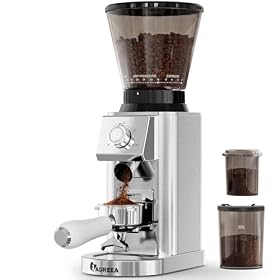 IAGREEA Coffee Grinder for Home Use, Conical Burr Espresso Grinder 48 GrindIAGREEA
$79.99 as of
View on Amazon
Product prices and availability are accurate as of the date/time indicated and are subject to change. Any price and availability information displayed on Amazon.com at the time of purchase will apply to the purchase of this product.
What matters in an espresso grinder
Fine adjustment control
Espresso often requires small changes in grind size. A grinder with broad or imprecise steps can make it difficult to correct a shot that runs too quickly or too slowly. Stepless adjustment or closely spaced settings can provide more control, although they may take longer to adjust between coffees.
Consistency
The grinder should produce grounds with a reasonably consistent particle distribution. Excessive variation can lead to uneven extraction, where some coffee overextracts while other coffee underextracts.
Dose and retention behavior
Consider how much coffee remains inside the grinder after grinding and how easily the next dose can be changed. Low-retention designs and simple adjustment controls are useful if you switch beans often, but they are not the only measures of grinder quality.
Espresso compatibility
A grinder marketed for drip coffee or general brewing may not have the adjustment precision, motor behavior, or burr design needed for espresso. Check the manufacturer's stated use rather than assuming any burr grinder is suitable.
Basic scale for espresso dosing and yield
 Maestri House S2 Espresso Coffee Scale with Timer 0.1g Precision Shot ScaleMaestri House
$30.39 as of
View on Amazon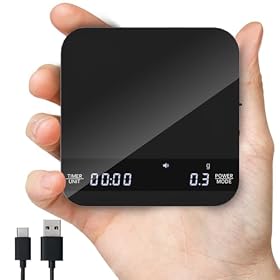 Espresso Coffee Scale with Timer, 0.1g/2kg, USB-C RechargeableERAVSOW
$23.99 as of
View on Amazon Mini Coffee Scale with Timer Automatic, 0.1g/2000g Rechargeable Precision Espresso ScaleStyuanmmy
$21.99 as of
View on Amazon
Product prices and availability are accurate as of the date/time indicated and are subject to change. Any price and availability information displayed on Amazon.com at the time of purchase will apply to the purchase of this product.
What matters in the espresso machine
Once the grinder is adequate, compare machines based on how you plan to use them.
Brewing and steaming workflow
If you make milk drinks, consider whether the machine steams milk manually, uses an automatic milk system, or requires switching between brewing and steaming. Single-boiler machines may require more workflow management, while machines designed for simultaneous brewing and steaming can be more convenient but may cost more and use more counter space.
Temperature control
Temperature stability can affect repeatability, especially when making several drinks. Look for clear manufacturer information about the machine's controls and operating procedure instead of assuming that a display or adjustable temperature automatically means better espresso.
Portafilter and basket arrangement
A standard-size portafilter and commonly available baskets can make replacement parts and upgrades easier to find. Some entry-level machines use pressurized baskets, which can be more forgiving of basic grinders but may provide less control for someone learning to dial in fresh coffee.
Warm-up time and daily convenience
A machine that takes a long time to heat may be frustrating for rushed mornings. Automatic shutoff, accessible water filling, and a usable drip tray can matter more in daily use than a long feature list.
Starter maintenance supplies
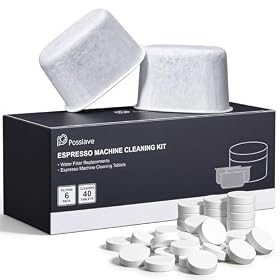 possiave 40 Espresso Cleaning Tablets and 6 Water Filters for Brevillepossiave
$11.95 as of
View on Amazon Ninja Luxe Café Espresso Machine Cleaning Tablets 8-PackNinja
$14.99 as of
View on Amazon USKICH 34 Pack Coffee Machine Cleaner Tablets,Coffee Maker Cleaner TabletsUSKICH
$7.99 as of
View on Amazon
Product prices and availability are accurate as of the date/time indicated and are subject to change. Any price and availability information displayed on Amazon.com at the time of purchase will apply to the purchase of this product.
Do not forget the accessory budget
At minimum, most espresso setups need:
- A suitable tamper if the machine does not include one that fits well
- A small scale that can measure the coffee dose and beverage output
- A knock box or another safe way to dispose of used grounds
- A milk pitcher for manual steaming
- Espresso machine cleaner and grinder cleaning supplies
- Water appropriate for the machine and local conditions
A bottomless portafilter, precision basket, dosing funnel, distribution tool, or puck screen may be useful later, but they are not always necessary for a first setup. Buy accessories that solve a specific workflow problem rather than adding every popular tool at once.
Common budget mistakes
Spending almost everything on the machine
A feature-rich machine paired with a weak grinder can produce inconsistent results and make troubleshooting confusing. The grinder is part of the extraction system, not an optional add-on.
Buying a cheap grinder and planning to upgrade immediately
This can be reasonable if the grinder is temporary and compatible with your machine, but repeated upgrades may cost more than buying a suitable espresso grinder initially. Check whether the grinder supports espresso adjustment and whether replacement burrs or parts are available.
Treating a pressurized basket as a permanent solution
Pressurized baskets can help compensate for preground coffee or a less precise grinder. They are useful for some beginners, but if you want to learn to adjust grind size and extraction, a setup that supports a standard or non-pressurized basket may offer more control.
Ignoring water and cleaning costs
Hard or unsuitable water can affect flavor and contribute to scale. Cleaning tablets, backflushing procedures, descaling requirements, and water filters vary by machine. Follow the manufacturer's instructions, and do not descale automatically if the manual specifies a different maintenance approach.
A simple buying process
- Set the complete setup budget. Include the machine, grinder, accessories, and initial supplies.
- Choose your drink pattern. Decide whether you mainly want straight espresso, milk drinks, or convenience beverages.
- Set the grinder floor. Exclude grinders that are not designed for espresso or lack useful fine adjustment.
- Compare machines within the remaining budget. Focus on workflow, steaming, water capacity, warm-up behavior, and serviceability.
- Reserve money for coffee and maintenance. Fresh beans and regular cleaning are part of the ongoing cost.
- Confirm compatibility. Check the grinder's espresso suitability, portafilter size, basket type, voltage, and the machine's water and cleaning requirements.
When to spend more
Spend more when the upgrade addresses a limitation you will notice regularly: difficult grind adjustment, poor steaming workflow, slow heat-up, inadequate capacity, or limited service support. Do not spend more solely because a machine has more buttons or a higher maximum pressure claim. Those specifications do not by themselves guarantee better espresso.
If the complete setup would exceed your budget, it is often sensible to buy the grinder first and save for the machine, provided you can store and use the grinder appropriately. Alternatively, choose a simpler machine while keeping the grinder at a level that supports fresh, adjustable espresso.
Bottom line
Budget for the grinder and machine together. The best allocation depends on whether you value espresso control, milk steaming, speed, or convenience, but a capable grinder should be a planned part of the purchase from the beginning. Add only the accessories you need, verify the machine's workflow and maintenance requirements, and leave room for coffee and water management.
FAQ
Should an espresso machine or grinder get the larger share of the budget?
There is no universal split, but the grinder should receive enough of the budget to provide espresso-suitable adjustment and consistency. If you mainly drink straight espresso, prioritize grinder control. If you mostly make milk drinks, machine steaming convenience may justify a larger machine allocation.
Can I use a regular coffee grinder for espresso?
Usually not. Many general-purpose grinders lack the fine adjustment range and consistency needed for espresso. Choose a grinder that the manufacturer specifically identifies as suitable for espresso.
Do I need expensive accessories when starting out?
No. A suitable tamper, a basic scale, cleaning supplies, and a milk pitcher if needed are usually more important than specialty distribution tools or upgraded baskets. Add accessories when they solve a clear workflow problem.
Is it reasonable to buy the grinder before the espresso machine?
Yes. Buying the grinder first can help you protect the most important part of the setup and save for a better-matched machine later. Confirm that the grinder is designed for espresso and can make the adjustments your eventual machine will require.