A pressurized basket is forgiving, so you do not need the most expensive espresso grinder. Look for consistent grinding, useful adjustment steps, easy dosing, and a grind range that can support both pressurized and standard baskets if you may upgrade later.
A pressurized-basket espresso machine can work with a wider range of grinds than a machine using a standard basket. That means you do not need an elite espresso grinder to get started. The best pairing is a grinder that produces reasonably consistent grounds, adjusts fine enough for espresso, and is simple to dose without wasting coffee.
What a pressurized basket changes
A pressurized, or dual-wall, basket creates resistance at the basket outlet rather than relying entirely on the coffee puck. This helps produce crema-like foam and acceptable flow even when the grind, dose, or tamp is not perfectly dialed in.
Because of that, a grinder for a pressurized-basket machine does not need extremely fine adjustment to deliver usable results. However, a better grinder can still improve flavor, reduce clumping, and give you more control over extraction.
If your machine accepts both pressurized and standard baskets, choose more carefully. A grinder that works well with a pressurized basket today should also offer enough consistency and adjustment range for standard-basket espresso later.
Grinder features that matter most
Burrs rather than blades
Choose a burr grinder rather than a blade grinder. Burrs crush coffee into a more controlled range of particle sizes, while blades chop unevenly and make repeatable espresso preparation difficult.
For a pressurized basket, a basic burr grinder may be sufficient. Burr material and grinder price matter less than whether the grinder can produce a usable espresso grind without excessive fines, large chunks, or overheating during normal home use.
Fine adjustment
The grinder should clearly offer an espresso setting or a grind range that reaches fine espresso grounds. More adjustment steps make it easier to change the grind gradually, but you do not necessarily need stepless adjustment for a pressurized basket.
A grinder with large jumps between settings can still work if the basket is forgiving. It becomes more limiting when you switch to a standard basket, change coffee beans, or try to adjust shot flow precisely.
Dosing control
Look for a grinder that lets you dose a repeatable amount. Useful options can include a timer, dose presets, a measured grinding chamber, or a simple system for grinding directly into the portafilter.
No dosing system is perfectly accurate for every coffee. Beans vary in size, density, and retention, so use a scale if you want reliable dose measurements. For casual use, a simple timed or manual grinder may be adequate.
Retention and cleanup
Ground coffee left inside the grinder can mix with a later dose and make adjustments less predictable. Lower retention is useful, but it should not be the only buying priority. Easy access for brushing out the chute and burr area may matter more for a beginner than a claimed retention figure.
Avoid choosing based only on a manufacturer's retention number. Retention can vary with the bean, grind setting, static, and the way the grinder is operated.
Noise, size, and workflow
A compact grinder may be preferable if it will live beside a small espresso machine. Consider whether the hopper, grounds container, portafilter holder, and adjustment dial are easy to use in your available space.
If you make only one or two drinks at a time, a smaller hopper or single-dose workflow can be convenient. If several people use the machine, a hopper and timed dosing may be faster.
Product prices and availability are accurate as of the date/time indicated and are subject to change. Any price and availability information displayed on Amazon.com at the time of purchase will apply to the purchase of this product.
What type of grinder should you buy?
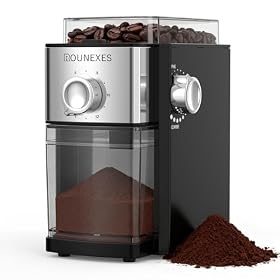
Basic electric burr grinder
This is usually the most practical choice for a pressurized-basket machine. It provides faster preparation than hand grinding and enough control for forgiving baskets.
Choose one with an espresso-capable range, stable adjustment, and a dose method you find easy to repeat. Do not pay a premium for advanced features you will not use.
Manual burr grinder
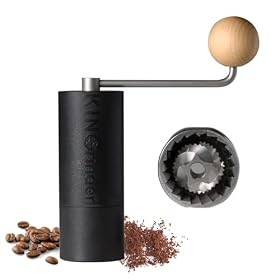
A manual grinder can provide good grind control for less money, but grinding espresso-fine coffee takes more effort. It makes sense when you prepare only occasional shots, have limited counter space, or want to prioritize grind quality over speed.
Check that the grinder is designed to handle espresso-fine settings. Some manual grinders are intended mainly for pour-over or French press and may not adjust fine enough or may be uncomfortable to operate at espresso settings.
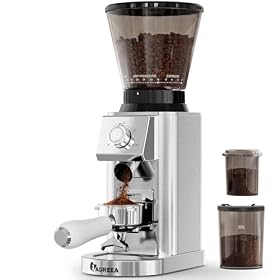
Higher-adjustment espresso grinder
A more capable espresso grinder is worthwhile if you plan to move from a pressurized basket to a standard basket. Standard baskets depend much more on grind size, dose, distribution, and tamping, so small grind changes can have a large effect on shot flow.
You may also benefit from this type of grinder if you frequently change beans, want to experiment with extraction, or expect to upgrade the espresso machine later.
Product prices and availability are accurate as of the date/time indicated and are subject to change. Any price and availability information displayed on Amazon.com at the time of purchase will apply to the purchase of this product.
When a basic grinder is enough
A basic burr grinder is generally enough when:
You use pre-ground coffee occasionally but want fresher coffee.
Your machine uses only pressurized baskets.
You value convenience more than precise shot dialing.
You usually use one coffee at a time.
You are comfortable adjusting by taste rather than measuring every dose.
The grinder should still produce grounds fine enough for espresso and allow you to repeat a similar dose. An inexpensive grinder that struggles to grind fine, produces very uneven particles, or clogs repeatedly is not a good pairing just because the basket is pressurized.
Product prices and availability are accurate as of the date/time indicated and are subject to change. Any price and availability information displayed on Amazon.com at the time of purchase will apply to the purchase of this product.
When to spend more
Spend more on the grinder if you expect to use a standard basket, buy whole beans with different roast levels, or upgrade your machine later. A better grinder can remain useful after a pressurized-basket machine is replaced, while a very basic grinder may become the limiting component.
Prioritize adjustment control, grind consistency, dosing repeatability, and serviceability over decorative features. A grinder with a large hopper, display, or many drink presets is not automatically better for espresso.
A simple setup process
Start with fresh beans and the grinder's espresso-range setting.
Grind enough coffee to fill the basket according to the machine or basket instructions.
Distribute the grounds reasonably evenly and tamp as instructed by the machine manufacturer.
Pull a shot and observe whether the machine reaches its normal pressure and flow behavior.
If the result is weak or runs unusually fast, try a finer setting. If the machine struggles, drips very slowly, or produces harsh flavors, try a coarser setting.
Change only one variable at a time, and clear old grounds when making a substantial adjustment.
A pressurized basket can mask some grind problems, so taste matters more than trying to match a particular flow rate. Follow the espresso machine and basket instructions if they differ from general guidance.
Common buying mistakes
Buying a blade grinder
Blade grinders are inexpensive, but their uneven grounds make espresso preparation less repeatable. They are a poor choice when a burr grinder is available within your budget.
Choosing a grinder with no espresso range
Some grinders are made only for coarse brewing methods. Confirm that the adjustment range includes fine espresso grinding before buying.
Paying for precision you will not use
A pressurized basket does not require the same level of fine control as a standard basket. If you do not plan to experiment or upgrade, a simpler grinder may provide better value.
Ignoring the portafilter size
If you want to grind directly into the portafilter, check that the grinder's holder or fork can accommodate your portafilter. Otherwise, you may need to grind into a container and transfer the coffee.
Treating the basket as a substitute for fresh coffee
Pressurization helps with extraction tolerance, but it cannot make stale beans taste fresh. Use reasonably fresh coffee and store it in an airtight container away from heat and light.
Bottom line
For a pressurized-basket machine, buy a burr grinder with a genuine espresso-capable range, practical adjustment steps, and a dosing workflow you will use consistently. A basic electric burr grinder is enough for many owners. Choose a more adjustable espresso grinder if you may switch to a standard basket, change coffees often, or want the grinder to remain useful with a future machine.
FAQ
Do I need an espresso grinder for a pressurized-basket machine?
Not necessarily. A burr grinder with an espresso-capable grind range is usually enough, even if it is not a premium espresso grinder. A true espresso-focused grinder becomes more important when using standard baskets.
Can I use a blade grinder with a pressurized basket?
It may produce coffee that the machine can extract, but blade-ground coffee is uneven and difficult to repeat. A burr grinder is the better choice for more consistent flavor and dosing.
Should I buy a grinder with stepless adjustment?
Stepless adjustment is useful for precise dialing-in, especially with standard baskets, but it is not essential for most pressurized-basket users. Clearly marked stepped settings can be easier for beginners.
Is a manual grinder suitable for espresso?
Yes, if it is designed to grind fine enough for espresso. Manual grinding takes more effort, so it is best for occasional use or for people who prioritize compact size and control over speed.