Built-in Grinder Versus a Separate Grinder: Which Is Better?
A built-in grinder saves counter space and simplifies the morning routine, while a separate grinder usually offers more control, easier upgrades, and greater flexibility. The better choice depends on your priorities, coffee habits, and available space.
Built-in grinder versus a separate grinder
A built-in grinder is usually the simplest choice: one machine takes up less space, costs less than buying two separate appliances, and keeps grinding and brewing in one workflow. A separate espresso grinder is usually the better long-term choice if you want more control over grind size, switch between coffees often, or upgrade your setup over time.
The important question is not only whether a machine can grind coffee. It is whether the grinder gives you enough adjustment, consistency, and convenience for the way you make espresso.
Built-in grinder: advantages and limitations
An espresso machine with a built-in grinder combines the grinder, dosing system, and brewer in one appliance. This can make the setup more approachable, especially for someone buying a first machine.
Why choose a built-in grinder
Less counter space: You need room for one appliance instead of a machine and grinder side by side.
Simpler workflow: Beans go into the hopper, and the machine grinds directly into the portafilter or brew area.
Fewer separate purchases: You do not need to choose a grinder separately.
Convenient everyday use: Built-in dosing controls can make it easier to repeat a morning routine.
Cleaner appearance: A combination machine may look less cluttered on a small counter.
Built-in grinders are especially practical when convenience matters more than extensive experimentation. They can also be a sensible option for households that make mostly one type of coffee and do not frequently change beans.
Common trade-offs
Less grinder flexibility: The available grind settings and dose controls are tied to the machine.
Harder upgrades: If the grinder becomes the limiting factor, replacing it may mean replacing or working around the entire machine.
More complicated servicing: A fault in the grinder can affect a combined appliance rather than a standalone accessory.
Bean switching can be awkward: Clearing beans from an integrated hopper may take more effort than changing a separate grinder's hopper or using a single-dose workflow.
Machine placement is less flexible: You cannot move the grinder independently to improve workflow or counter layout.
A built-in grinder is not automatically poor quality. The key is whether its adjustment range and dosing controls are suitable for the espresso you want to make.
Separate grinder: advantages and limitations
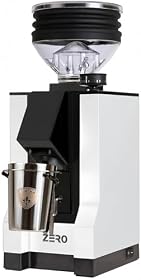
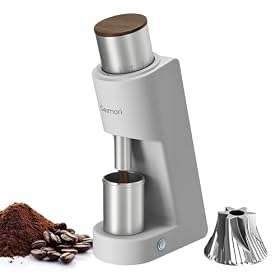
With a separate grinder, the espresso machine only brews the coffee. The grinder handles bean preparation independently, giving you more freedom to choose and replace each part of the setup.
Why choose a separate grinder
More control over grind size: Espresso often needs small adjustments as beans, humidity, and freshness change.
Easier upgrades: You can improve the grinder without replacing the espresso machine.
Simpler bean changes: A separate grinder may be easier to empty, clean, or use for different coffees.
More placement options: The grinder can sit wherever it is most convenient for dosing and tamping.
Independent maintenance: A grinder problem does not necessarily take the espresso machine out of service.
More choice: You can select features such as timed dosing, manual dosing, a hopper, or single-dose operation.
A separate grinder is often the better fit for someone who wants to learn espresso more seriously. Small grind adjustments can affect flow rate, shot time, flavor, and puck preparation, so control over the grinder becomes increasingly useful as your skills develop.
Common trade-offs
More counter space: You need room for two appliances and may need to organize separate power cords.
More setup decisions: Grinder type, burr design, adjustment range, dosing method, and retention all affect the workflow.
Potentially higher total cost: Buying a machine and grinder separately may require more spending up front.
More steps: You must move coffee from the grinder to the portafilter or another dosing container.
More cleaning points: The grinder and espresso machine each need their own routine maintenance.
Product prices and availability are accurate as of the date/time indicated and are subject to change. Any price and availability information displayed on Amazon.com at the time of purchase will apply to the purchase of this product.
The specifications that matter most
Grind adjustment
Espresso usually requires finer and more precise adjustment than many other brewing methods. A grinder with broad, clearly usable adjustments is easier to tune when you change beans or correct a shot that runs too quickly or slowly.
Do not judge a grinder only by the number of advertised settings. The practical question is whether its adjustments are fine enough for espresso and easy to repeat.
Dosing control
A grinder may dose by time, by a programmed setting, or manually. Timed dosing can be convenient, but the amount of coffee produced may change as the grind setting, bean type, and bean freshness change. Weighing the dose can provide better consistency, regardless of whether the grinder is built in or separate.
Hopper and bean switching
A larger hopper can reduce refilling, but it may be inconvenient if you regularly change beans. Consider how easily the hopper can be emptied and whether retained grounds remain inside the burr area or chute.
If you use several coffees, a separate grinder with a low-retention or single-dose workflow may be more practical. These features do not eliminate all retained grounds, but they can make switching easier.
Burr access and cleaning
Coffee oils and fines accumulate in grinders over time. Look for a design that provides reasonable access to the burrs and discharge path, following the manufacturer's cleaning instructions. On a built-in grinder, cleaning may require working around the espresso machine's larger housing.
Repair and replacement
A separate grinder is easier to replace independently. With a built-in grinder, check whether replacement parts and service information are available for the specific machine. This matters more if you expect to keep the espresso machine for many years.
Product prices and availability are accurate as of the date/time indicated and are subject to change. Any price and availability information displayed on Amazon.com at the time of purchase will apply to the purchase of this product.
Which setup fits your routine?
Choose a built-in grinder if you:
Have limited counter space.
Want the simplest all-in-one workflow.
Usually use one bean at a time.
Prefer fewer purchasing decisions.
Are comfortable accepting the machine's grinder controls and future upgrade limits.
Choose a separate grinder if you:
Want to adjust espresso precisely.
Change beans regularly.
Expect your technique or preferences to develop.
Want to upgrade the grinder independently.
Make espresso for multiple people with different preferences.
Already own a suitable grinder or want to select one carefully.
Product prices and availability are accurate as of the date/time indicated and are subject to change. Any price and availability information displayed on Amazon.com at the time of purchase will apply to the purchase of this product.
A practical buying approach
If you are starting from scratch, first decide whether convenience or flexibility is more important. Then compare the complete workflow rather than only the machine's headline features.
For a built-in grinder, check:
How fine and repeatable the grind adjustment is.
Whether the dose can be changed easily.
How the grinder is cleaned and accessed.
How difficult it is to switch beans.
What service or replacement support is available.
For a separate grinder, check:
Whether it is designed for espresso rather than only coarse brewing methods.
How the adjustment mechanism works.
Whether the dosing method suits your routine.
How much coffee remains in the grinder after use.
Whether the grinder fits your available counter space and portafilter workflow.
Avoid choosing a machine solely because it includes a grinder. A convenient grinder that is difficult to adjust or clean may be less satisfying than a basic espresso machine paired with a grinder that suits your habits.
Bottom line
A built-in grinder is the better choice for a compact, straightforward setup and a repeatable everyday routine. A separate grinder is the stronger choice for control, bean switching, maintenance flexibility, and future upgrades.
If you are unsure, prioritize the grinder more than the convenience of having it built into the machine. Espresso depends heavily on grind size and consistency, and a separate grinder gives you more ways to adapt as your coffee preferences change.
FAQ
Is an espresso machine with a built-in grinder worth it?
It can be worth it if you value a compact setup and a simple workflow. Before buying, confirm that the grinder has enough adjustment and dosing control for espresso, and consider how difficult it will be to clean or replace.
Does a separate grinder make better espresso?
Not automatically. Espresso quality depends on the grinder, espresso machine, beans, dose, and technique. A suitable separate grinder generally gives you more control and upgrade flexibility, but a well-designed built-in grinder can still be adequate for many home users.
Can I use a separate grinder with an espresso machine that has a built-in grinder?
Usually, yes. You can often leave the built-in grinder unused and grind into the portafilter or a dosing container with the separate grinder. Check the machine's instructions for any settings or workflow limitations.
Is a built-in grinder harder to clean?
It can be. The grinder is integrated into a larger appliance, so access may be less convenient than with a standalone grinder. Follow the manufacturer's instructions and do not use water or cleaning products where the manual does not permit them.
Should I buy the espresso machine first or the grinder first?
If you are building a setup from scratch, consider both together. A modest espresso machine paired with a capable espresso grinder can offer more control than spending most of the budget on a machine with a limited integrated grinder.