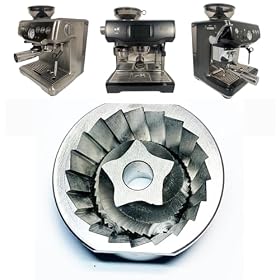
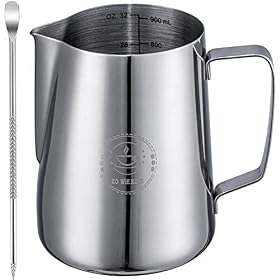
The best espresso machine for lattes at home should make balanced espresso and produce smooth, finely textured milk without adding unnecessary complexity. Here is how to choose the right setup for your routine and budget.
If lattes are your main drink, the best espresso machine for home use is one that combines consistent espresso extraction with a capable steam wand. A machine can make excellent coffee yet still be frustrating for lattes if it has weak steam, poor temperature recovery, or a wand that is difficult to position.
For most home users, a semi-automatic machine with a separate grinder offers the best balance of control and drink quality. A super-automatic machine is easier and faster, while a dual-boiler or high-end heat-exchanger machine is better suited to frequent back-to-back milk drinks.
What matters most for making lattes
A real steam wand
A manual steam wand gives you the most control over milk texture. Look for a wand that can pivot easily and has enough clearance for your preferred pitcher. A wand that is too short, fixed in place, or awkwardly angled can make learning difficult.
Some machines use a single-hole tip, while others use multiple holes. More holes can steam milk faster, but they may also require better positioning and technique. The number of holes is less important than controllable steam and a wand design that lets you create a smooth whirlpool in the milk.
Avoid choosing a machine based only on the presence of a “milk frother.” Automatic frothers may be convenient, but they often produce airy foam rather than the glossy, pourable microfoam used in a traditional latte.
Temperature and steam recovery
Making a latte involves two jobs: brewing espresso and steaming milk. Entry-level machines may need a pause between those tasks, particularly if they use a single heating system. That is not necessarily a problem if you make one drink at a time, but it can become inconvenient when preparing several lattes.
A machine with separate brewing and steaming systems, or a design intended for faster temperature switching, is more practical for multiple drinks. These machines usually cost more and may require more maintenance, so they are worth considering mainly if you regularly serve guests or make several milk drinks in one session.
Stable espresso brewing
Milk adds sweetness and texture, but the espresso still needs enough strength to stand up to it. Useful features include a portafilter and basket system that supports consistent dosing, a pump designed for espresso brewing, and temperature control that does not vary excessively during extraction.
Pressure numbers alone should not decide your purchase. A machine advertised with a high maximum pump pressure is not automatically better. Grind size, coffee freshness, dose, tamping, and temperature all affect the final shot.
A suitable grinder
A good espresso machine cannot compensate for an inconsistent grinder. If you are buying a semi-automatic machine, plan for a burr grinder with fine adjustment specifically intended for espresso. Blade grinders are generally a poor fit because they produce an uneven particle size.
An integrated grinder can save counter space and simplify the setup. A separate grinder is easier to replace or upgrade and lets you keep the machine and grinding functions independent. If two people in your household use different coffee beans or brew methods, a separate grinder may also be more flexible.
Water reservoir and cleaning access
A larger reservoir is convenient for multiple lattes, but it also takes longer to empty and clean. Check whether the reservoir can be removed without moving the machine and whether you can easily see the water level.
You should also look for straightforward access to the drip tray, brew group or portafilter area, steam wand tip, and any removable milk components. A machine that is difficult to clean tends to accumulate coffee oils and milk residue, which can affect flavor and reliability.
Which type of espresso machine is best for lattes?
Semi-automatic espresso machines
A semi-automatic machine is the strongest choice for people who want café-style lattes and are willing to learn a short preparation routine. You grind the coffee, fill and tamp the portafilter, start the shot, and steam the milk separately.
Best for: users who want control over espresso and milk texture.
Trade-offs: requires a separate grinder in many cases, plus practice and regular cleaning.
Super-automatic espresso machines
A super-automatic machine grinds coffee, brews espresso, and may dispense milk with the push of a button. It is convenient for households that prioritize speed and repeatability over manual control.
Best for: quick weekday lattes and users who do not want to manage a portafilter.
Trade-offs: milk systems can require careful cleaning, and the drink may offer less control over grind, dose, extraction, and milk texture.
If you choose one, pay close attention to how the milk system is cleaned. A removable milk container is convenient, but tubing and internal passages still need to be flushed according to the manufacturer’s instructions.
Single-boiler machines
A single-boiler machine can be a good value for occasional latte drinkers. It typically brews espresso and steams milk at different temperatures, so you may need to wait while the machine switches modes.
Best for: one or two lattes at a time and buyers who want a lower-complexity setup.
Trade-offs: slower workflow for multiple drinks and less convenience when brewing and steaming in quick succession.
Heat-exchanger and dual-boiler machines
These machines are designed for a more continuous workflow. Depending on the design, they can brew and steam with less waiting than a basic single-boiler machine.
Best for: frequent latte preparation, entertaining, and users who value workflow consistency.
Trade-offs: higher purchase cost, larger size, and potentially more involved maintenance.
Product prices and availability are accurate as of the date/time indicated and are subject to change. Any price and availability information displayed on Amazon.com at the time of purchase will apply to the purchase of this product.
Features worth paying for
Prioritize these features when they match your routine:
A manual steam wand: especially if you want glossy microfoam and control over texture.
Useful temperature control: important for repeatable espresso and a smoother transition to steaming.
A removable water tank and drip tray: makes everyday care easier.
A portafilter size and basket system with readily available replacements: useful when you eventually want to change baskets or accessories.
A pressure gauge or other brewing feedback: helpful for learning, although it does not replace correct grind adjustment.
A cup clearance that fits your latte glasses: check this if you prefer tall glassware.
A grinder with fine espresso adjustment: essential for a machine with an integrated grinder.
Features that may be less important include decorative controls, an unusually large water tank, or a high advertised pump-pressure number without useful brewing controls.
Product prices and availability are accurate as of the date/time indicated and are subject to change. Any price and availability information displayed on Amazon.com at the time of purchase will apply to the purchase of this product.
How much machine do you need?
Choose based on how often you make lattes rather than on the most advanced specifications.
Occasional latte drinker: a basic semi-automatic or compact super-automatic machine may be sufficient.
Daily latte drinker: prioritize steam-wand usability, easy cleaning, and a grinder that can make consistent espresso.
Several lattes in a row: consider faster temperature recovery or a machine designed to brew and steam with less waiting.
Milk drinks for a household: compare milk-system cleaning requirements, water capacity, and the number of steps required for each drink.
A more expensive machine is not automatically the best choice if you make only one latte each morning. In that case, money may be better spent on a capable grinder, fresh coffee, and an easy-to-clean steam wand.
Product prices and availability are accurate as of the date/time indicated and are subject to change. Any price and availability information displayed on Amazon.com at the time of purchase will apply to the purchase of this product.
Common setup mistakes that make lattes disappointing
Even a capable machine can produce weak or watery lattes if the setup is wrong.
The grind is too coarse. The espresso may run quickly and taste thin. Adjust the grinder finer in small steps.
The coffee is stale. Old coffee often produces flat flavor and weak crema. Use coffee that has been stored well and is suitable for espresso.
The milk is overheated. Excessive heat can create a cooked taste and reduce sweetness. Use the manufacturer’s guidance and stop before the milk becomes excessively hot.
The milk is only foamed on the surface. Keep the wand tip near the surface briefly to add air, then position it deeper to create a whirlpool and integrate the foam.
The espresso-to-milk ratio is too low. Too much milk can mask the coffee. Try a smaller milk volume or a stronger espresso base.
The steam wand is not purged and wiped. Milk residue can block the tip and create hygiene problems. Purge the wand immediately after steaming and wipe it with a damp cloth.
Bottom line
For most people, the best espresso machine for lattes at home is a semi-automatic model with a usable manual steam wand, dependable temperature control, and a separate espresso-capable burr grinder. Choose a super-automatic machine if convenience is more important than manual milk texture. Choose a more advanced multi-boiler design only if you regularly make several drinks and will use its faster workflow.
Before buying, confirm the machine’s footprint, cup clearance, reservoir access, cleaning process, and replacement-part availability. Those everyday details often matter more than impressive-sounding pressure or power figures.
FAQ
Can any espresso machine make a latte?
Most espresso machines can make the espresso base for a latte, but not all have a suitable way to steam milk. For traditional latte texture, choose a machine with a controllable manual steam wand. Machines with simple frothing attachments may produce larger bubbles and less glossy foam.
Is a single-boiler espresso machine good for lattes?
Yes, especially if you make one or two lattes at a time. A single-boiler machine may need to switch between brewing and steaming temperatures, so it is slower for back-to-back drinks than a machine designed for simultaneous or faster brewing and steaming.
Do I need a grinder for a home latte machine?
If you buy a semi-automatic machine, a consistent espresso grinder is strongly recommended. Pre-ground coffee can work, but it gives you less control over freshness and extraction. A super-automatic machine normally includes its own grinder.
Is a steam wand better than an automatic milk frother for lattes?
A steam wand is usually better if you want control over microfoam and latte pouring. An automatic milk frother is easier for beginners and faster for routine drinks, but the texture and control may be more limited.
How should I maintain a latte espresso machine?
Flush the brew path as directed, empty and clean the drip tray, rinse or clean the portafilter and basket, and purge and wipe the steam wand after every use. Follow the manufacturer’s schedule for backflushing, descaling, filter replacement, and cleaning any milk system.