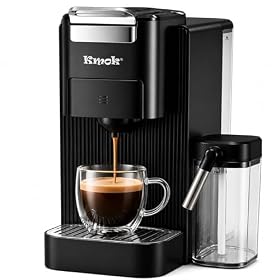
If you will not grind coffee daily, a capsule espresso machine may be the better choice. Here is how it compares with a grinder-based setup and what tradeoffs to expect.
If you will not grind coffee every day, a capsule espresso machine is often the more sensible choice than buying a grinder and leaving it unused. Capsules provide pre-ground, pre-portioned coffee with very little preparation, while a traditional espresso machine and grinder offer more control but require a regular routine.
The right choice depends on whether you value convenience more than coffee flexibility, freshness, and lower long-term consumable costs.
When a capsule machine makes sense
A capsule machine is a good fit if you:
Make espresso only occasionally
Want the same result with minimal adjustment
Do not want to weigh beans or dial in a grinder
Have limited counter space
Prefer fast cleanup
Mostly drink milk-based beverages, where small differences in espresso extraction may matter less
Share the machine with people who want simple, repeatable operation
A capsule machine can also be a practical alternative for a second kitchen, office, guest space, or vacation home.
Product prices and availability are accurate as of the date/time indicated and are subject to change. Any price and availability information displayed on Amazon.com at the time of purchase will apply to the purchase of this product.
Capsule machine versus a grinder-based setup
The main difference is not simply machine quality. It is how much control and daily effort you want.
Factor
Capsule machine
Espresso machine with grinder
Preparation
Insert a capsule and start the brew
Grind, dose, tamp, and adjust as needed
Consistency
Usually high from one capsule to the next
Depends on grind setting, dose, tamping, and beans
Control
Limited to the available capsule choices
Control over beans, grind size, dose, and recipe
Cleanup
Usually quick, but the capsule bin and drip tray still need attention
More grounds and coffee residue to clean
Freshness
Depends on the capsule packaging and age
Freshly ground coffee can offer more aroma and flavor
Waste
Used capsules create individual waste items
Spent grounds are generally easier to compost or discard
Learning curve
Low
Moderate to high, depending on the equipment
Best for
Convenience and occasional use
Enthusiasts and people who enjoy adjusting coffee
If you already know you will not grind regularly, the extra control of a grinder-based setup may not be useful. Equipment that sits unused is rarely a better purchase simply because it can produce a more adjustable shot.
Product prices and availability are accurate as of the date/time indicated and are subject to change. Any price and availability information displayed on Amazon.com at the time of purchase will apply to the purchase of this product.
What you give up with capsules
Capsules simplify espresso, but they limit several aspects of the coffee experience.
Less control over the coffee
You generally cannot make fine changes to the dose, grind size, or extraction time. If a capsule tastes too weak, too dark, or too bitter, your choices may be limited to trying a different capsule or changing the drink size if the machine allows it.
Less flexibility with fresh beans
A grinder-based setup lets you use different roasters, single-origin coffees, decaf beans, and freshly roasted coffee. Capsule selection varies by system, and not every capsule format offers the same range of roast levels or decaffeinated options.
Ongoing capsule purchases
Capsules are convenient, but they are a continuing consumable. Compare the cost and availability of the capsules you actually want, not just the machine's purchase price. A machine that is inexpensive to buy can be inconvenient if its compatible capsules are difficult to find locally or only available in a narrow selection.
More packaging waste
Capsule recycling depends on the capsule material, local programs, and the manufacturer's process. Check the instructions for the specific capsule system before assuming used capsules can go into your household recycling.
Product prices and availability are accurate as of the date/time indicated and are subject to change. Any price and availability information displayed on Amazon.com at the time of purchase will apply to the purchase of this product.
Capsule machine versus a superautomatic espresso machine
A superautomatic machine may be the middle ground if you want whole-bean coffee without manually grinding and tamping each drink. It typically handles more of the preparation than a traditional espresso machine, but it still requires bean storage, cleaning, and periodic maintenance.
Choose a superautomatic machine instead of a capsule machine if you want:
Freshly ground beans without manual espresso preparation
More control over beans and drink strength
The ability to make several types of coffee from one machine
Choose capsules instead if your priority is the shortest, simplest routine and you do not want to manage beans, grinders, or coffee adjustments.
How to choose a capsule machine
Check the capsule system first
Capsules are not universally interchangeable. Before buying, confirm which capsule format the machine accepts and whether that format is easy for you to purchase. Consider the coffee styles, decaf options, and drink sizes available in that system.
Consider the drinks you actually make
If you mostly drink straight espresso or lungo-style coffee, a basic capsule machine may be enough. If you make lattes or cappuccinos, decide whether you want to heat and froth milk separately or use a machine with an integrated milk feature.
A separate milk frother can be easier to replace and clean. An integrated milk system may be more convenient, but it can add cleaning steps and more parts that require regular attention.
Look at the water tank and capsule container
A larger water tank and used-capsule container can reduce refills if several people use the machine. A compact machine may fit a small counter better, but it can require more frequent emptying and filling.
Do not ignore maintenance
Capsule machines need less daily work than grinder-based machines, but they are not maintenance-free. You still need to:
Empty and rinse the drip tray
Empty the used-capsule container before it becomes stuck or overfilled
Descale at the interval specified by the manufacturer
Hard water can increase scale buildup. Use only the water treatment or descaling method approved for the machine, and follow its instructions rather than guessing at a schedule.
If the capsule machine produces a weak or disappointing drink
Try these checks before replacing it:
Confirm the capsule is compatible. A capsule that does not seat correctly may not puncture or extract properly.
Check the brew size. A small capsule brewed into a large cup will naturally taste diluted. Use the intended serving size or a shorter setting if available.
Clean the capsule holder and outlet. Coffee residue can restrict flow or affect how the capsule is pierced.
Run the manufacturer's cleaning or rinse cycle. Follow the manual and do not add cleaning chemicals that are not approved for the machine.
Descale if flow has slowed. Scale can reduce water flow and temperature consistency.
Check the water tank and seating. Make sure the tank is full enough and properly installed.
If the machine still leaks, stops heating, or produces very little water after cleaning and descaling, unplug it and consult the manual or an authorized service provider. Do not open the machine unless the manufacturer specifically permits user repair. For an older, inexpensive machine with a failing pump, heater, or control board, replacement is often more practical than repair.
Bottom line
Buy a capsule machine if you want espresso with almost no daily coffee preparation and you are comfortable choosing from a capsule system's available coffees. Choose a grinder-based setup if you genuinely enjoy fresh beans, recipe adjustments, and the process of making espresso. If you want fresh beans without manual grinding, consider a superautomatic machine—but expect more cleaning, maintenance, and equipment complexity than with capsules.
FAQ
Is a capsule machine worth it if I only drink espresso occasionally?
It can be. The main benefit is convenience: capsules stay portioned and ready, and there is no grinder to adjust or maintain. Compare the capsule availability and ongoing cost with how often you expect to use the machine.
Do I need a grinder with a capsule espresso machine?
No. Capsule machines use pre-ground coffee sealed in capsules, so a separate grinder is unnecessary. Buying a grinder only makes sense if you also plan to brew with whole beans.
Are capsule machines easier to clean than traditional espresso machines?
Usually, yes, because they do not leave loose coffee grounds in a portafilter or grinder. They still need regular rinsing, drip-tray and capsule-bin cleaning, and descaling. Machines with milk systems require additional cleaning.
Can capsule coffee taste as good as coffee from freshly ground beans?
Capsules can be convenient and consistent, but freshly ground beans generally offer more control and may provide greater aroma and flavor range. Taste also depends on the capsule, machine, drink size, and personal preference.