Espresso machine for mostly milk drinks and one straight shot
If most of your drinks include steamed milk but you still want a good straight espresso occasionally, prioritize reliable steaming and an easy workflow over advanced shot-control features you may rarely use.
If you mostly make lattes, cappuccinos, and other milk drinks—with an occasional straight espresso—the best espresso machine is usually one with dependable steam performance, simple controls, and a grinder that can make consistent espresso. You do not necessarily need a cafe-style dual-boiler machine, but you should avoid choosing based on espresso extraction alone and treating milk steaming as an afterthought.
What to prioritize
Strong, usable milk steaming
For mostly milk drinks, the steam wand and heating system matter more than small differences in espresso controls. Look for:
A manual steam wand that can create enough pressure for smooth microfoam
Controls that let you adjust steam gradually
A wand design that is easy to wipe and purge after use
A machine that can steam without an unnecessarily long wait
A powerful wand is helpful, but raw power is not the only consideration. A beginner-friendly steam control and a wand that is positioned comfortably may make more difference in daily use.
Machines with automatic milk systems can be convenient if you want repeatable foam with minimal technique. However, they add milk-contact parts that need frequent rinsing and cleaning. A manual wand takes more practice but gives you greater control over foam texture and milk temperature.
A grinder that can actually produce espresso grounds
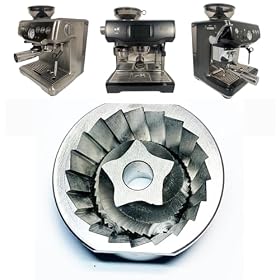
A machine with a built-in grinder can simplify the counter setup and reduce the number of separate purchases. It is a sensible choice if convenience matters more than experimenting with different coffees or changing grind settings frequently.
An integrated grinder may be less appealing if you already own a capable espresso grinder, want to upgrade the grinder independently, or regularly switch between espresso and other brewing methods. In that case, a machine without a built-in grinder can offer a cleaner upgrade path.
Whichever setup you choose, the grinder should provide fine adjustments suitable for espresso. A basic blade grinder is not an appropriate substitute because it produces uneven particles and does not offer the control needed for dialing in a shot.
A heating system suited to your drink pattern
Your drink pattern affects how much heating performance you need:
Single-thermoblock or single-boiler machines: Often compact and less expensive, but may require a transition or wait between brewing espresso and steaming milk.
Heat-exchange machines: Can brew and steam with less interruption, but may involve a larger machine and more involved operation.
Dual-boiler machines: Keep brewing and steaming temperatures separate and are useful for frequent back-to-back drinks, but they often cost more and take up more space.
If you usually make one drink at a time, a single-heater machine may be sufficient. If you regularly prepare several milk drinks in succession, faster switching or simultaneous brewing and steaming becomes more valuable.
Basic espresso control rather than unnecessary complexity
Even for milk drinks, the espresso base still matters. Milk can soften bitterness and hide some flaws, but it cannot rescue stale coffee, an inconsistent grind, or a poorly prepared puck.
Useful features may include:
Adjustable brew volume or programmable buttons
A pressure gauge, if you want help monitoring extraction
Temperature control or a PID system, particularly if you enjoy straight espresso
A standard-size portafilter and widely available baskets
A sturdy tamper and a stable place to lock in the portafilter
Do not pay for advanced profiling or extensive temperature adjustment unless you expect to drink straight espresso often or enjoy experimenting. For occasional straight shots, consistent basic brewing and a good grinder are usually more useful than a long list of specialty controls.
Choose between a built-in grinder and a separate grinder
Built-in grinder: best for a simpler setup
A built-in grinder can be a good match when you want one appliance, limited counter clutter, and a straightforward morning routine. It also reduces the risk of buying an espresso machine before selecting a grinder.
Check how easy it is to adjust the grind, whether the adjustment is fine enough for espresso, and how easily the hopper and burr area can be cleaned. A machine that is convenient to use but difficult to clean may become frustrating over time.
Separate grinder: best for flexibility
A separate espresso grinder is usually the better choice if you care about dialing in shots, changing beans, or replacing the grinder without replacing the machine. It also lets you choose a machine based primarily on steaming and brewing performance.
The tradeoff is additional cost, counter space, and another device to maintain. For a household that mostly drinks milk beverages, the flexibility may not be necessary—but it can still improve the quality and consistency of the espresso underneath the milk.
Product prices and availability are accurate as of the date/time indicated and are subject to change. Any price and availability information displayed on Amazon.com at the time of purchase will apply to the purchase of this product.
Consider the daily workflow
Before choosing a machine, picture the complete process rather than just the brewing step:
Grind and dose the coffee.
Distribute and tamp the grounds.
Brew the espresso.
Steam and pour the milk.
Wipe and purge the steam wand.
Rinse the portafilter and clean the drip tray as needed.
A machine with a fast steam system is less useful if the portafilter is awkward, the water tank is difficult to remove, or cleaning requires disassembling several parts after every drink. For mostly milk drinks, easy cleanup and comfortable steam-wand access deserve as much attention as pressure or temperature claims.
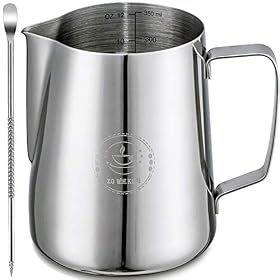
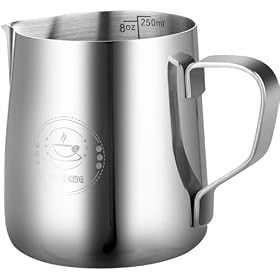
Pay attention to the machine’s footprint, water-tank access, cup clearance, and whether you can fit your preferred milk pitcher beneath the wand. A compact model may suit a small kitchen, but a very small water tank or drip tray can mean more frequent interruptions.
Product prices and availability are accurate as of the date/time indicated and are subject to change. Any price and availability information displayed on Amazon.com at the time of purchase will apply to the purchase of this product.
What kind of machine makes sense?
Choose a manual or semi-automatic machine when you want control
This category is a strong fit if you are willing to learn basic grinding, tamping, and milk-steaming technique. It gives you the most control over both the espresso and milk texture, but it also has the steepest learning curve.
It is usually the best match for someone who wants milk drinks to taste café-like and does not mind a hands-on routine.
Choose a super-automatic machine when convenience comes first
A super-automatic machine grinds, brews, and often prepares milk with fewer manual steps. It can be a practical choice if several people want drinks quickly or if you do not want to learn espresso preparation.
The main compromises are less control over the shot and milk texture, more internal cleaning, and potentially more complicated maintenance. Check how the milk system is rinsed and cleaned before buying.
Choose a pod or capsule machine only for maximum simplicity
Capsule machines are convenient and consistent, and some make milk drinks with separate milk systems or accessories. They are less suitable if you want to adjust the grind, use freshly ground beans, or improve your straight espresso through technique.
They can still be the right answer when speed, low mess, and minimal preparation matter more than control.
Product prices and availability are accurate as of the date/time indicated and are subject to change. Any price and availability information displayed on Amazon.com at the time of purchase will apply to the purchase of this product.
Features that are easy to overvalue
Pressure numbers
A higher advertised pump-pressure number does not automatically produce better espresso. Extraction depends on the coffee dose, grind, puck preparation, water temperature, and the machine’s actual brewing behavior. Treat pressure specifications as one detail, not the deciding factor.
Extremely large boilers
Large boilers and dual-boiler systems can be valuable for frequent back-to-back brewing and steaming. If you normally prepare one drink at a time, they may add cost, size, and heat-up demands without improving your routine enough to justify the tradeoff.
Automatic milk foam without checking cleanup
Automatic milk systems save effort during preparation, but milk residue requires careful cleaning. Confirm that the milk container, tubing, frothing unit, and rinsing cycle are practical for your household.
Product prices and availability are accurate as of the date/time indicated and are subject to change. Any price and availability information displayed on Amazon.com at the time of purchase will apply to the purchase of this product.
A practical buying checklist
Before purchasing, confirm that the machine:
Has a steam wand or milk system you are comfortable maintaining
Can handle your expected number of drinks without inconvenient delays
Includes or supports an espresso-capable grinder
Fits beneath your cabinets and leaves room to operate the wand
Has accessible water and drip-tray components
Uses baskets, gaskets, and other parts that can be replaced
Provides the level of manual control you actually want
Has clear descaling and cleaning instructions
For mostly milk drinks and one straight shot, the sweet spot is often a semi-automatic machine with a capable steam wand and either a good integrated grinder or a separate espresso grinder. Move toward a dual-boiler or more advanced setup only if you make several drinks in a row, want tighter brewing control, or expect to spend time learning espresso as a hobby.
FAQ
Do I need a dual-boiler espresso machine for mostly milk drinks?
Usually not if you make one drink at a time. A dual-boiler becomes more useful when you prepare several drinks in succession or want to brew and steam simultaneously. A capable single-heater machine may be sufficient for occasional home use.
Is a built-in grinder good enough for lattes?
It can be, provided it offers espresso-suitable grind adjustment and produces consistent grounds. A separate grinder is preferable if you want more control, change beans often, or plan to upgrade the grinder independently.
Should I choose a manual steam wand or an automatic milk system?
Choose a manual wand if you want control over foam texture and are willing to practice. Choose an automatic system if convenience and repeatability matter more, but check the cleaning requirements for every milk-contact component.
Can milk hide poor espresso?
Milk can soften bitterness and mask some extraction problems, but a consistent grinder and properly prepared espresso still improve the flavor of lattes and cappuccinos. A machine should not be selected on steaming performance alone.