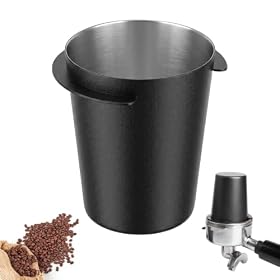
A knock box and a dosing cup solve different espresso-preparation tasks. Here’s how each accessory works, whether you need both, and what to look for before buying.
Knock box and a dosing cup
A knock box gives you a clean place to dispose of used espresso pucks, while a dosing cup helps transfer ground coffee from a grinder into a portafilter with less mess. They are not interchangeable: choose a knock box for puck disposal, a dosing cup for cleaner dosing, or both if you want a tidier workflow.
What a knock box does
A knock box is a small container with a padded or covered bar. After brewing, you turn the portafilter over and tap it against the bar to remove the spent coffee puck.
A knock box is useful because it:
Keeps wet coffee grounds out of the sink and trash can
Makes cleanup faster between shots
Protects the portafilter from being struck against a hard surface
Provides a dedicated place for used grounds
Knock box features that matter
Capacity: A compact box works for occasional home use, but a larger container is more convenient if you make several drinks each day. Capacity is usually described by size or approximate puck count, but actual capacity depends on how tightly the grounds are packed.
Knock bar material: Look for a bar with a soft covering or resilient material. A bare metal bar can be noisy and may scratch or damage a portafilter over time if used forcefully.
Container material: Stainless steel is durable and easy to clean. Plastic and composite boxes can be lighter and quieter. Whichever material you choose, the inside should be easy to empty and wash.
Stability: A broad base, non-slip feet, or enough weight keeps the box from sliding while you knock out a puck. This matters more than appearance in daily use.
Cleaning access: Coffee grounds retain moisture and can develop an odor. A removable bar or an opening large enough for easy rinsing is helpful.
What a dosing cup does
A dosing cup is a container used to catch ground coffee from a grinder and transfer it into the portafilter. It can reduce grounds that scatter around the grinder or land on the counter.
A dosing cup is especially useful when:
Your grinder dispenses unevenly into the portafilter
You weigh beans or ground coffee separately
You want to shake or gently swirl grounds before transferring them
Your portafilter does not fit neatly under the grinder chute
You are trying to keep the coffee station cleaner
Some dosing cups are designed to fit over the top of a portafilter. Others are intended only to catch grounds and then pour them into the basket. Check the cup’s opening and base dimensions against your portafilter before buying; espresso portafilters vary in diameter and shape.
Dosing cup features that matter
Capacity: The cup should hold your normal dose without grounds piling up at the top. A cup that is too small can spill during grinding or transfer.
Shape: A tapered interior and a broad pouring edge can make it easier to move grounds into the basket. A straight-sided cup may be simpler to clean but can be less controlled during pouring.
Height and grinder clearance: If the cup must sit under the grinder, confirm that it fits between the chute and the counter or portafilter fork. A cup that is too tall may not fit, while one that is too short may allow grounds to escape.
Material: Stainless steel is durable and easy to clean. Food-safe plastic is usually lighter and may be quieter. Avoid rough interiors or sharp edges that can trap grounds.
Compatibility: Some dosing cups are made to sit directly on a particular portafilter size. Measure the inside or outside diameter required by the design rather than assuming all espresso accessories fit together.
Product prices and availability are accurate as of the date/time indicated and are subject to change. Any price and availability information displayed on Amazon.com at the time of purchase will apply to the purchase of this product.
Knock box vs. dosing cup
These accessories belong at different points in the workflow:
Accessory
Main job
Used before or after brewing?
Knock box
Remove and collect spent coffee pucks
After brewing
Dosing cup
Catch and transfer fresh ground coffee
Before brewing
A knock box does not improve the accuracy of your coffee dose. A dosing cup does not provide a suitable place to discard wet pucks. If you are deciding which one to buy first, choose based on the problem you notice most often.
Product prices and availability are accurate as of the date/time indicated and are subject to change. Any price and availability information displayed on Amazon.com at the time of purchase will apply to the purchase of this product.
Which one should you buy first?
Choose a knock box first if cleanup is the problem
Buy a knock box if you are tapping pucks into the trash, sink, or a makeshift container. It is a basic convenience accessory and is usually useful even with a simple home espresso machine.
Prioritize stability, a cushioned knock bar, and easy cleaning. You do not need an oversized box unless you make many shots before emptying it.
Choose a dosing cup first if grinding is messy
Buy a dosing cup if coffee grounds spill around the grinder, your portafilter does not sit well under the chute, or you want to weigh and transfer grounds separately.
Prioritize compatibility with your grinder and portafilter. A dosing cup that does not fit the equipment is less useful than a simpler container with the right dimensions.
Choose both for a cleaner workflow
A dosing cup helps prepare the fresh grounds, and a knock box handles the used puck afterward. Together, they create a more organized workflow without changing the espresso machine itself.
You may not need both if you make espresso only occasionally, your grinder doses neatly into the portafilter, and you already have a washable container for spent grounds.
Setup and care tips
Keep the knock box close enough to the machine that you do not carry a wet portafilter across the counter.
Empty the knock box before grounds become heavily compacted or start to smell.
Do not pour large amounts of coffee grounds down the sink; they can contribute to drain clogs.
Rinse and dry both accessories regularly, especially if coffee residue remains damp.
If using a dosing cup with a scale, check that the cup sits securely and does not touch surrounding surfaces while weighing.
Avoid knocking the portafilter against the machine, countertop, or a hard-edged container.
Confirm dimensions before ordering, particularly for dosing cups that fit over or inside a portafilter.
Bottom line
A knock box is for disposing of used espresso pucks; a dosing cup is for catching and transferring fresh grounds. They solve separate problems, so neither replaces the other. Start with a knock box if cleanup is your main annoyance, choose a dosing cup if grinding is messy, and get both if you want a cleaner, more consistent home espresso routine.
FAQ
Do I need both a knock box and a dosing cup?
No. They are optional accessories with different jobs. A knock box helps dispose of used pucks, while a dosing cup catches and transfers fresh grounds. Buy one or both based on the part of your workflow that needs improvement.
Can I use a dosing cup as a knock box?
It is not recommended. Dosing cups are generally designed for holding fresh grounds and may be too small or too fragile for knocking out wet coffee pucks. Use a container made for puck disposal.
What size dosing cup fits my espresso machine?
Check the cup’s required portafilter diameter, grinder clearance, and capacity against your equipment. Portafilters and grinder layouts vary, so do not assume a dosing cup is universal.
What should go in a knock box?
A knock box is intended for spent espresso coffee pucks and grounds. Empty it regularly and dispose of the grounds in the trash or compost where appropriate rather than flushing them down the sink.