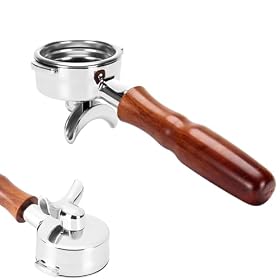
Portafilter ears that do not match a 58mm standard
A 58mm portafilter refers mainly to the basket diameter, not a universal ear or locking pattern. Check the group head, lug position, ear thickness, and insertion angle before buying a replacement.
A portafilter can be called “58mm” and still fail to fit because 58mm usually describes the basket diameter—not the shape, thickness, position, or number of the locking ears. Commercial-style portafilters may use different lug patterns, and even small differences can prevent the handle from inserting or locking correctly.
Why 58mm portafilter ears do not always match
The ears, also called lugs or tabs, are the metal projections that slide into the group head and lock the portafilter in place. Compatibility depends on several dimensions:
Basket diameter: Often listed as 58mm, but this is only one measurement.
Ear position: The angle and spacing between the ears must match the group head.
Ear thickness: A thicker lug may not enter the group-head slots; a thinner one may lock loosely.
Ear height and shape: The lug must engage the group gasket correctly without bottoming out.
Insertion angle: Some portafilters enter with the handle pointing in a particular direction and rotate only a limited distance.
Portafilter body depth: The basket and body must sit at the correct height against the group gasket.
As a result, a 58mm portafilter from one espresso machine may not fit another 58mm machine. “58mm” is not, by itself, a complete compatibility standard.
Check the fit before forcing it
Remove the portafilter from the machine and inspect both parts with the machine turned off and cool. Do not force a handle into the group head. Forcing it can damage the group-head ears, gasket, or portafilter lugs.
1. Compare the old and replacement portafilters
Place the two portafilters side by side and compare:
Number of ears
Ear spacing and orientation
Ear thickness
Ear height
Distance from the basket rim to the top of the locking ears
Basket diameter and depth
A replacement may look nearly identical but still differ enough to prevent locking.
2. Check whether the basket is causing the problem
Remove the basket and try inserting the empty portafilter carefully. If the portafilter still will not enter or rotate, the issue is probably the lug pattern or body shape rather than the basket.
If it fits empty but not with the basket installed, check that:
The basket is fully seated in the portafilter.
The basket rim is not oversized or distorted.
A retaining spring is not protruding into the basket groove.
The basket is the correct depth for the portafilter body.
Never brew without a properly retained basket.
3. Look for a trapped gasket or obstruction
Coffee residue can build up in the group head and make a compatible portafilter appear too tight. With the machine unplugged or switched off according to the manufacturer’s instructions, inspect the group-head area for:
Compressed or swollen gasket material
Dried coffee around the locking slots
A damaged shower screen
A loose screw or screen edge blocking insertion
Debris inside one of the group-head openings
Clean only as directed by the espresso machine manufacturer. Avoid scraping sealing surfaces with sharp tools.
4. Confirm the machine’s actual portafilter type
Some machines use a commercial-style group with a 58mm basket but a nonstandard lug arrangement. Others use a proprietary portafilter, pressurized basket system, or a size close to 58mm that sellers may describe loosely.
Check the machine manual, manufacturer’s accessory chart, or the exact replacement-part description. The machine model is more useful for compatibility than the nominal basket size alone.
Product prices and availability are accurate as of the date/time indicated and are subject to change. Any price and availability information displayed on Amazon.com at the time of purchase will apply to the purchase of this product.
How to measure portafilter compatibility
If documentation is unavailable, compare the original portafilter with the replacement rather than relying on the stated diameter. A ruler or caliper can help, but measurements should be taken from matching reference points.
Record:
The outside diameter of the basket rim.
The number of locking ears.
The width and thickness of each ear.
The angle between the ears.
The distance from the basket rim to the upper locking surface.
The handle’s locked position after rotation.
The most important measurement is often not the basket diameter. It is the lug geometry and the vertical position at which the portafilter compresses the group gasket.
A portafilter that inserts but rotates far beyond the normal locked position may also be incompatible. It may not compress the gasket correctly, even if it appears to fit.
Product prices and availability are accurate as of the date/time indicated and are subject to change. Any price and availability information displayed on Amazon.com at the time of purchase will apply to the purchase of this product.
Common symptoms and what they mean
The portafilter will not enter the group head
Likely causes include ears that are too wide or thick, incorrect spacing, an obstruction in the group head, or a machine with a different lug design.
It enters but will not rotate
Check for incorrect ear angles, oversized ears, a basket that is not seated, or coffee buildup in the group head. Do not apply excessive force.
It rotates but stops too early
The ears may be too thick, too tall, or positioned differently from the original. A new gasket or an incorrectly installed gasket can also reduce available clearance.
It rotates too far or feels loose
The ears may be too thin or too narrow, or the portafilter may have the wrong locking pattern. A loose fit can cause leakage and should not be treated as acceptable just because the portafilter locks.
Water leaks around the portafilter
First check that the basket is seated, the rim is clean, and the group gasket is in good condition. If the portafilter is not compressing the gasket at the correct height, the portafilter itself may be incompatible.
Product prices and availability are accurate as of the date/time indicated and are subject to change. Any price and availability information displayed on Amazon.com at the time of purchase will apply to the purchase of this product.
Should you modify the ears?
Usually, no. Filing or grinding the ears can change the locking height and weaken the part. It can also damage the group head if the modified portafilter locks unevenly or fails under pressure.
Modification is especially risky on machines that operate at brewing pressure and heat. Use a portafilter specifically listed for the espresso machine or group-head type. If the fit is uncertain, ask the machine manufacturer or a qualified espresso-machine technician before making changes.
Product prices and availability are accurate as of the date/time indicated and are subject to change. Any price and availability information displayed on Amazon.com at the time of purchase will apply to the purchase of this product.
When to replace the portafilter or gasket
Replace the portafilter when the ears are visibly worn, bent, cracked, or badly rounded, or when a known-compatible replacement fits correctly but the original no longer locks securely.
Replace the group gasket when it is hard, cracked, swollen, flattened, or leaking despite a correctly matched portafilter and clean sealing surfaces. A gasket is not a solution for a fundamentally incorrect lug pattern.
If the group-head ears themselves are damaged, stop using the machine until the part is inspected. Group-head repairs can involve disassembly and should generally follow the manufacturer’s service instructions or be handled by a qualified technician.
How to buy the correct replacement
Search by the exact espresso machine model or group-head specification, then confirm all of the following before ordering:
The listed basket diameter
The number and arrangement of ears
Compatibility with the machine’s group head
Single-, double-, or bottomless configuration, if relevant
Basket depth and included basket type
Whether the listing is for the complete portafilter or only a replacement basket
Treat “58mm” as a starting point, not proof of fit. The safest replacement is one that matches the original portafilter’s lug geometry and is explicitly identified for the machine.
If no compatible portafilter is available, replacing the machine’s portafilter with an aftermarket part may not be practical. In that case, an original replacement part is usually the lower-risk choice.
FAQ
Does a 58mm basket fit every 58mm portafilter?
No. Basket diameter is only one compatibility measurement. The basket rim, depth, retaining spring, and portafilter body must also match.
Are all 58mm portafilter ears the same?
No. Ear count, spacing, thickness, height, and locking angle can differ between machines and group-head designs.
Can I file the portafilter ears until they fit?
It is generally not recommended. Filing can create an unsafe or uneven lock, damage the group head, and cause leaks. Use a confirmed compatible portafilter instead.
Why does a replacement portafilter lock but still leak?
It may have the wrong locking height or lug geometry, or the group gasket may be worn or dirty. Confirm compatibility before replacing the gasket.