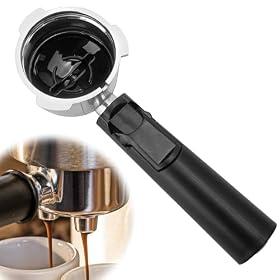
A portafilter that will not lock usually has an easy mechanical cause: too much coffee, a dirty basket rim, a displaced gasket, or an incompatible or damaged portafilter. Follow these checks before forcing the handle or replacing the machine.
Portafilter not locking in
If your portafilter is not locking into the espresso machine, do not force the handle. The most common causes are an overfilled basket, coffee grounds trapped around the rim, a dirty or displaced group gasket, or a portafilter that does not match the machine. Remove the portafilter, let the machine cool and depressurize, then check the following in order.
1. Remove excess coffee from the basket
An overfilled basket can prevent the portafilter from rising far enough into the group head for its locking tabs to engage. This is especially likely if:
The handle stops before reaching its usual position.
The coffee puck or grounds show a deep mark from the shower screen.
The portafilter locks when empty but not when filled.
The basket is heaped above its normal level.
Level the grounds and reduce the dose slightly. Do not assume that a larger basket can take any amount of coffee; the correct dose depends on the basket design and the machine.
To isolate the problem, try locking the empty portafilter into the group head. If it locks empty but not with coffee, the dose, grind pile, or basket is the likely cause.
2. Clean the basket and portafilter rim
Coffee grounds can sit on the basket lip, inside the portafilter groove, or on the group-head sealing surface. Even a small amount may stop the portafilter from seating correctly.
Remove the basket if it is removable.
Brush or rinse loose grounds from the basket, portafilter, and group head.
Wipe the basket rim and the top edge inside the portafilter.
Check that the basket is fully seated and not tilted.
Dry the parts and try again without coffee.
Do not pry aggressively around the group gasket or use a sharp tool that could damage the sealing surface.
Product prices and availability are accurate as of the date/time indicated and are subject to change. Any price and availability information displayed on Amazon.com at the time of purchase will apply to the purchase of this product.
3. Check the basket and portafilter are the correct type
A replacement portafilter or basket may look similar while having different locking-tab positions, diameter, depth, or basket-retention details. Compatibility matters more than appearance.
Check the espresso machine manual or manufacturer parts information for the correct portafilter size and configuration. Also confirm whether the machine uses a pressurized basket, a standard basket, or a special pod or capsule adapter.
A mismatch is likely if the portafilter:
Will not enter the group head at all.
Stops at an unusual angle.
Fits loosely or sits unusually low.
Locks only with excessive force.
Worked correctly before a replacement part was installed.
Do not try to modify the tabs or file the portafilter to make it fit. An incorrect fit can cause leaks or allow the portafilter to release under pressure.
Product prices and availability are accurate as of the date/time indicated and are subject to change. Any price and availability information displayed on Amazon.com at the time of purchase will apply to the purchase of this product.
4. Inspect the group gasket and shower screen
The group gasket forms the seal between the portafilter and the machine. It may be displaced, swollen, hardened, cracked, or packed with old coffee. A gasket that has moved out of its groove can block the portafilter from entering far enough to lock.
With the machine turned off and cool:
Look around the group head for a gasket that is hanging down or uneven.
Check for hardened coffee or debris around the gasket.
Inspect the shower screen for a loose edge or visible obstruction.
Compare the gasket position around the full circumference.
Clean only as directed by the manufacturer. If the gasket is damaged, deformed, or no longer seated in its groove, replace it with the correct part for the machine. A gasket replacement may require removing a retaining screw or ring; follow the manual, and do not work on a hot or pressurized machine.
Product prices and availability are accurate as of the date/time indicated and are subject to change. Any price and availability information displayed on Amazon.com at the time of purchase will apply to the purchase of this product.
5. Look for damaged locking tabs or group-head parts
The portafilter’s locking tabs, ears, and handle connection can wear or become bent. The group head can also have damaged or obstructed locking surfaces.
Inspect the metal tabs for:
Bends, cracks, or sharp burrs
Uneven wear compared with each other
Coffee buildup that changes their shape
A loose handle or portafilter body
If the machine’s group-head locking surfaces are damaged, stop using the machine until the manufacturer or a qualified repair professional evaluates it. A portafilter that turns but does not hold securely can release during brewing.
6. Make sure the handle is aligned correctly
Some portafilters must enter the group head at a particular angle before the tabs can pass the locking points. Hold the handle level, insert it fully, and turn it in the direction shown in the manual. Avoid swinging the handle upward or downward while locking it.
If the portafilter only fits when tilted, or if it locks at a dramatically different position than before, the issue is probably not normal alignment. Recheck the basket, gasket, and compatibility instead of forcing it.
When should you replace the portafilter?
A replacement portafilter is reasonable when the body is cracked, the locking tabs are bent or worn, the handle is loose, or the part is the wrong type for the machine. Match the replacement by the exact machine model or the manufacturer’s listed dimensions and locking configuration.
Replace the gasket instead when the portafilter fits correctly but will not seat because the old gasket is swollen, displaced, hardened, or damaged. Replacing the whole machine is usually unnecessary unless the group head or frame is damaged and repair is not practical.
If the portafilter locks but leaks
A portafilter that locks but leaks around the edge usually points to a dirty or worn group gasket, an uneven basket rim, too much coffee, or a portafilter that is not fully seated. Clean the sealing surfaces, reduce the dose, and check the gasket before tightening the handle harder.
If water leaks from the portafilter body, handle joint, or a cracked component, stop brewing and replace the damaged part. Never hold the portafilter in place by hand while the pump is running.
When to stop troubleshooting
Stop and unplug the machine if you notice a damaged power cord, burning smell, smoke, unusual electrical noise, or water reaching electrical components. For a damaged group head, stripped locking mechanism, or persistent pressure-related problem, use the manufacturer’s service instructions or contact a qualified espresso-machine technician.
FAQ
Why will my portafilter not lock into my espresso machine?
The most common causes are too much coffee in the basket, grounds on the basket or group gasket, a displaced gasket, incorrect alignment, or an incompatible portafilter. Try locking the empty, clean portafilter first to separate a dosing problem from a fit problem.
Why does my portafilter lock when empty but not with coffee?
The basket is likely overfilled, the grounds are piled above the rim, or the basket is not seated correctly. Level the coffee and reduce the dose slightly, then check whether the puck is contacting the shower screen.
Can I force a portafilter to lock?
No. Forcing it can damage the locking tabs, group gasket, or group head, and a damaged connection may release under brewing pressure. Remove the portafilter and check the dose, cleanliness, gasket, alignment, and compatibility.
How do I know if the group gasket is causing the problem?
Look for a gasket that is uneven, hanging down, hardened, swollen, cracked, or packed with coffee. If the portafilter sits unusually low or will not rotate to its normal locked position, the gasket may need cleaning or replacement.