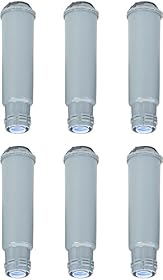
A filter pitcher treats the water before it reaches your espresso machine, while an in-tank softener treats water inside the machine's reservoir. The better choice depends on your water hardness, machine compatibility, coffee use, and willingness to replace cartridges or resin.
A water filter pitcher and an in-tank softener can both reduce mineral buildup in an espresso machine, but they work at different points and are not interchangeable. A pitcher is usually the more flexible option for treating all the water you pour into the machine. An in-tank softener is more targeted and convenient when your espresso machine is designed to accept one.
Neither option removes scale that has already formed. You may still need to descale according to the espresso machine manufacturer's instructions.
The short answer
Choose a water filter pitcher when you want to treat water for multiple uses, need larger capacity, or are unsure whether your machine's reservoir can accept a replacement softener.
Choose an in-tank softener when your espresso machine specifies a compatible cartridge or resin pouch and you want a simple, machine-specific way to reduce hardness.
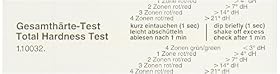
If your tap water is very hard, neither option should be selected by guesswork. Test the water or check a local water-quality report, then compare the result with your machine's recommended water range.
How the two options differ
Water filter pitcher
A pitcher filters water before you add it to the espresso machine. Depending on its design, it may reduce chlorine, taste and odor, sediment, and some dissolved minerals. The exact result depends on the filter media and the water going into it.
A pitcher can be useful if you also want filtered water for drinking, a kettle, or other appliances. Its drawbacks are the extra filling step, limited filter capacity, and the possibility that it does not reduce hardness enough for your machine.
Do not assume that every drinking-water pitcher is a scale-control solution. Check the product's stated contaminant or mineral-reduction claims rather than choosing based only on the word “filtered.”
In-tank softener
An in-tank softener is placed in the espresso machine's water reservoir or attached to a specified intake point. Many use ion-exchange resin to reduce calcium and magnesium, the minerals most associated with scale.
The main advantages are convenience and direct compatibility with the machine. The main limitations are fit, finite capacity, and replacement timing. A softener can become less effective as its resin is exhausted, even if it still looks usable.
Use only the type and placement approved for your machine. A loose pouch, cartridge, or third-party insert that does not fit correctly could obstruct the reservoir, interfere with the pump intake, or void warranty coverage.
Water filter pitcher for espresso-machine scale control
Product prices and availability are accurate as of the date/time indicated and are subject to change. Any price and availability information displayed on Amazon.com at the time of purchase will apply to the purchase of this product.
Which reduces espresso-machine scale better?
The answer depends on the water and the specific filter—not simply on whether it is a pitcher or a softener.
A suitable in-tank softener can be effective because it is designed for the machine's water path. A suitable pitcher can be equally practical or better when it provides enough hardness reduction and is replaced on schedule.
Look for these details:
Hardness reduction: This is more relevant to scale than taste improvement alone.
Filter capacity: Capacity may be listed by gallons, liters, or an estimated time period. Actual life can vary with water hardness and usage.
Compatibility: Confirm the espresso machine model or reservoir design before buying an in-tank product.
Replacement requirements: Resin cartridges and pitcher filters lose effectiveness over time.
Water chemistry: Hardness is important, but alkalinity and overall mineral balance also affect scale, corrosion, and coffee flavor.
Machine guidance: The manufacturer's recommended water range takes priority over a generic filter claim.
A water-softening product that removes too many minerals may not be ideal either. Extremely low-mineral water can affect flavor and may be unsuitable for some machines. Do not use distilled or reverse-osmosis water unless the machine manufacturer says it is appropriate, often with a specified remineralization approach.
Product prices and availability are accurate as of the date/time indicated and are subject to change. Any price and availability information displayed on Amazon.com at the time of purchase will apply to the purchase of this product.
Pitcher versus in-tank softener: practical comparison
Product prices and availability are accurate as of the date/time indicated and are subject to change. Any price and availability information displayed on Amazon.com at the time of purchase will apply to the purchase of this product.
How to choose based on your situation
Choose a pitcher if:
You want one water-treatment method for your espresso machine and other household uses.
Your machine has no provision for an in-tank softener.
You prefer to see and manage the filter replacement schedule outside the machine.
You have confirmed that the pitcher reduces hardness sufficiently for your water.
You make enough coffee that the pitcher's capacity is practical.
Choose an in-tank softener if:
Your machine's manual specifically supports one.
You want to fill the reservoir without separately filtering each batch.
The replacement product states compatibility with your machine.
You are willing to track resin life based on water hardness and usage.
You do not need the same treated water for other appliances.
Consider a broader water-treatment solution if:
Your tap water is consistently very hard.
You are filling the machine frequently and quickly exhausting small filters.
Scale returns soon after proper descaling and filter replacement.
You need consistent water for several appliances.
In that situation, a point-of-use or whole-house solution may be more appropriate, but it should be selected using actual water data and installed according to local plumbing and safety requirements.
Product prices and availability are accurate as of the date/time indicated and are subject to change. Any price and availability information displayed on Amazon.com at the time of purchase will apply to the purchase of this product.
Do you still need to descale?
Usually, yes. A pitcher or in-tank softener helps reduce future mineral deposits; it does not dissolve deposits already inside the thermoblock, boiler, valve, or water passages.
Follow the espresso machine manufacturer's descaling interval and chemical instructions. Do not substitute a water softener for descaler, and do not assume a filtered machine never needs maintenance. A machine may still need cleaning for coffee oils, backflushing where applicable, and periodic inspection of the reservoir and intake screen.
Common mistakes to avoid
Buying for taste filtration alone
A filter that improves taste or reduces chlorine may not reduce hardness enough to protect an espresso machine. Look for a clear hardness or scale-control claim.
Leaving a depleted filter in place
An old pitcher filter or exhausted softener is not reliable protection. Record the installation date and replace it according to the manufacturer's guidance, adjusting for heavy use or harder water when instructed.
Using a softener that does not fit the reservoir
Do not cut, modify, or force a cartridge into place. If the manual does not identify the product type or placement, contact the manufacturer before using it.
Assuming filtered water eliminates maintenance
Water treatment reduces risk; it does not replace cleaning, inspection, or descaling.
Ignoring unusual machine symptoms
Slow flow, a noisy pump, inconsistent brewing, or a blocked steam or hot-water path can have several causes. Stop using the machine if there is leaking, electrical damage, or a burning smell, and seek qualified service.
Bottom line
For most home users, a water filter pitcher is the more flexible choice, provided it actually reduces hardness to a level suitable for the espresso machine. An in-tank softener is a convenient alternative when the machine explicitly supports a compatible cartridge or resin pouch.
Test or verify your water hardness, follow the machine's water recommendations, replace filters on schedule, and continue descaling as directed. The best option is the one that delivers suitable water consistently without creating a compatibility or maintenance problem.
FAQ
Is an in-tank softener better than a water filter pitcher for an espresso machine?
Not universally. An in-tank softener may be more convenient and machine-specific, while a pitcher may offer greater capacity and flexibility. Compare their hardness-reduction claims with your water hardness and the espresso machine manufacturer's water requirements.
Can a water filter pitcher prevent espresso-machine scale?
It can reduce future scale if it removes enough hardness from your water and the filter is replaced on schedule. Not every pitcher reduces hardness, so check the product specifications rather than relying on taste or chlorine claims.
Does an in-tank softener remove existing scale?
No. An in-tank softener helps reduce future mineral deposits but does not descale internal components. Follow the machine manufacturer's descaling instructions.
Can I use both a pitcher and an in-tank softener?
Possibly, but it is not automatically necessary. Excessively low-mineral water may be unsuitable for some machines, and combining treatments can make water chemistry difficult to predict. Follow the espresso machine and filter manufacturers' guidance.
How do I know when an espresso-machine water softener needs replacement?
Use the manufacturer's stated capacity or replacement interval, taking water hardness and coffee volume into account. A softener can lose effectiveness before it shows obvious physical signs of exhaustion.