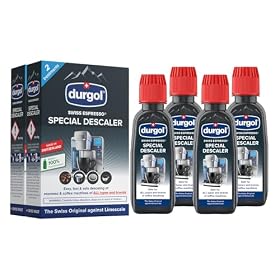
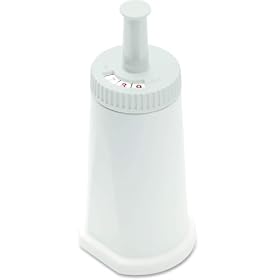
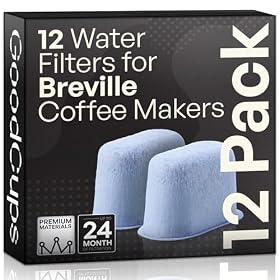
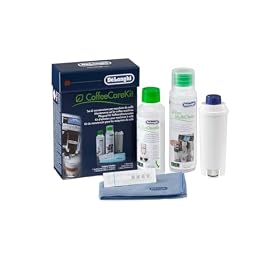
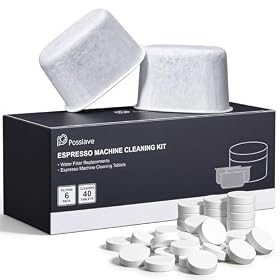
A descaler removes mineral buildup inside an espresso machine, while a water filter helps reduce the minerals that cause it. Here is how to choose a compatible kit and use both correctly.
Descaler and a water filter kit
Descaler and a water filter serve different purposes in an espresso machine. Descaler removes existing mineral buildup from internal water passages and heating components. A water filter helps reduce the minerals entering the machine in the first place. Using the right products can help maintain water flow, temperature performance, and taste—but neither product is universally compatible with every machine.
Descaler vs. water filter
What descaler does
Descaling is a periodic cleaning process. A descaling solution dissolves mineral deposits, often called scale, that can accumulate in the boiler, thermoblock, valves, and water circuit.
Descaler is useful when your machine has symptoms such as:
Slower water flow
Reduced steam performance
Unusual noises while heating or pumping
A descale warning
Visible mineral flakes
A change in brewing temperature or consistency
Descaler does not replace routine rinsing, backflushing, or cleaning of the brew group. Those tasks address coffee oils and residue rather than mineral deposits.
What a water filter does
An espresso-machine water filter is usually installed in the reservoir or on the machine’s water intake. Depending on its design, it may reduce chlorine, taste and odor compounds, and some minerals. It can help slow scale formation, but it does not remove scale that is already inside the machine.
A filter also does not make every water source suitable. Follow the machine manufacturer’s guidance for water hardness and filtration. Extremely hard water may require a different maintenance schedule, while very soft or distilled water may not be recommended for some machines.
How to choose a compatible kit
Check the espresso machine manual first
Look for the manufacturer’s instructions on:
Approved descaler formulations
Whether the machine requires a proprietary filter
Filter shape and installation location
Water-hardness settings
Filter replacement interval
Descaling procedure and warning-light reset steps
Some machines accept generic descaler, while others specifically require a manufacturer-approved product. Using an unsuitable acid, cleaning tablet, or filter can damage components or affect warranty coverage.
Match the filter to the machine, not just the brand
A brand may use more than one filter design across its machine range. Before buying, compare the replacement filter’s compatibility list with the exact model name or number in your manual.
Check the following details:
Physical shape and connection point
Whether the filter fits inside the reservoir or attaches elsewhere
Required installation adapter, if any
Filter orientation
Whether the machine needs a filter-setting or installation step
Replacement interval specified by the manufacturer
Do not force a filter that does not seat correctly. A poor fit can allow unfiltered water through or cause leaks.
Choose the descaler by formulation and use case
Descalers may use different acids and concentrations. The important question is not whether a solution is simply labeled “descaler,” but whether it is intended for espresso machines and approved for your machine’s materials and cleaning cycle.
Avoid substituting vinegar unless the manufacturer explicitly permits it. Vinegar can leave a persistent odor, may not be recommended for some internal components, and can be less suitable than a purpose-made descaling product.
Do not mix descaler with other cleaners. Follow the dilution, contact time, flushing, and disposal directions on the product and machine instructions.
Product prices and availability are accurate as of the date/time indicated and are subject to change. Any price and availability information displayed on Amazon.com at the time of purchase will apply to the purchase of this product.
Do you need both?
For many machines, using both is practical:
Use the filter regularly to reduce incoming impurities and minerals.
Use descaler periodically to remove deposits that still form over time.
A filter does not eliminate the need to descale unless the manufacturer specifically says otherwise. The correct interval depends on water hardness, machine usage, filter type, and the machine’s built-in monitoring system.
If your machine has a water-hardness test strip or hardness setting, use it. Entering the correct setting can help the machine calculate a more appropriate maintenance interval.
Product prices and availability are accurate as of the date/time indicated and are subject to change. Any price and availability information displayed on Amazon.com at the time of purchase will apply to the purchase of this product.
How to use descaler safely
Read the espresso machine’s descaling instructions before adding any solution.
Remove coffee from the portafilter and empty the drip tray if instructed.
Remove or bypass the water filter if the manual directs you to do so.
Mix the descaler only as specified on the product label.
Run the machine’s dedicated descaling program when available.
Complete every rinse cycle. Remaining solution can affect taste and may irritate the mouth or skin.
Reinstall or replace the water filter according to the machine’s instructions.
Make and discard a small amount of water before brewing coffee again if the manual recommends an additional flush.
Keep descaler away from eyes, children, pets, and food surfaces. Wear the protective equipment specified on the label, and never open or disassemble a machine that is hot or pressurized.
Product prices and availability are accurate as of the date/time indicated and are subject to change. Any price and availability information displayed on Amazon.com at the time of purchase will apply to the purchase of this product.
When to replace the filter or descaler
Replace a water filter when it reaches the manufacturer’s stated service interval, when the machine requests replacement, or when the filter has been installed for longer than recommended. A filter that is overdue may no longer provide the intended reduction in impurities and can become a source of stale odors.
Replace descaler when the product is expired, contaminated, leaking, or stored outside the conditions stated on its label. Do not use an unlabeled liquid or a product whose ingredients and intended use are unknown.
Common buying mistakes
Buying a filter by appearance alone
Two filters can look similar but use different connectors or have different flow characteristics. Confirm exact compatibility before ordering.
Assuming a filter removes all scale
Filtration reduces the problem; it does not dissolve deposits already present. A machine can still need descaling even when a filter is installed.
Using too much descaler
More concentrate is not necessarily better. Excess solution can require additional rinsing and may not be appropriate for the machine’s internal materials. Use the stated amount.
Ignoring local water hardness
A maintenance schedule suitable for soft water may be too long for hard water. Use the machine’s water-hardness guidance rather than relying on a generic calendar reminder.
Forgetting to update the machine after installing a filter
Some machines require the filter to be activated in a menu or the water-hardness setting to be adjusted. Skipping this step can cause inaccurate maintenance reminders.
When a kit is the right purchase
A combined kit makes sense when it includes a descaler approved for your machine and a filter that matches its exact reservoir or intake system. It is less useful if the filter is incompatible or if the descaler instructions do not match your machine’s required procedure.
If you cannot confirm compatibility, buy the filter and descaler separately from clearly identified product listings or the machine manufacturer. For a machine with persistent low flow, leaks, electrical faults, or heating problems after proper descaling, stop using it and consult the manufacturer or a qualified appliance technician rather than repeatedly adding cleaner.
FAQ
Can I use descaler and a water filter at the same time?
They are both part of normal maintenance, but they are not used in the same way. A filter stays installed during normal use, while descaler is used during a cleaning cycle. Remove or bypass the filter during descaling if the machine instructions require it.
How often should I descale an espresso machine?
Follow the machine’s warning system or maintenance schedule. The interval depends on water hardness, usage, filtration, and the model’s design. Hard water and frequent use generally require more frequent attention.
Is vinegar safe for descaling an espresso machine?
Do not assume vinegar is safe. Use the manufacturer-approved descaler unless the manual specifically permits vinegar. Vinegar can leave odor and may not be suitable for every machine or component.
Does a water filter eliminate the need to descale?
Usually, no. A filter can reduce the minerals entering the machine, but it does not remove existing deposits and may not eliminate scale formation. Continue following the manufacturer’s descaling instructions.
Can I use any espresso water filter with my machine?
No. Filters differ in shape, connection, capacity, and compatibility. Match the filter to the exact espresso machine model and follow the installation and replacement instructions.