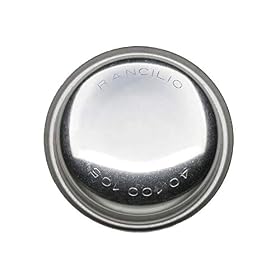
Blind Basket for Backflushing: How to Choose and Use One
A blind basket is the sealed basket used to backflush many espresso machines. Here is how to check compatibility, use detergent correctly, and avoid common mistakes.
A blind basket for backflushing is an espresso basket with no outlet holes. Inserted into a compatible portafilter, it lets pump pressure build so water and espresso residue can be flushed from the machine’s brew circuit and group head.
The important buying detail is compatibility: the basket must fit your portafilter’s diameter and locking depth, and it should be used only with a machine that supports backflushing. Check your espresso machine manual before using detergent or starting a cleaning cycle.
What a blind basket does
A normal filter basket allows espresso to flow through its holes. A blind basket blocks that flow, causing water to press against the group gasket, shower screen, valve, and related passages. When the machine releases or vents that pressure, dirty water drains away.
Backflushing is different from descaling. A blind basket helps remove coffee oils and residue from the brew path. It does not remove mineral scale from the boiler or water circuit. Use the manufacturer-recommended descaling procedure for scale.
How to choose the right blind basket
Match the portafilter size
Blind baskets are sold for common portafilter diameters, but diameter alone is not always enough. The basket must sit correctly in the portafilter and seal against the group gasket when locked in.
Before buying, check:
The portafilter diameter listed in your machine’s manual
Whether the machine uses a standard, pressurized, or proprietary portafilter
The basket’s outside diameter and rim design, if provided
Whether the basket is intended for the number of tabs or locking position used by your portafilter
If you cannot find the size, measure the inside of the portafilter or look up the replacement basket specified for your exact machine. Avoid assuming that two machines with the same stated portafilter size use identical baskets.
Choose a basket or a rubber backflush disc
A solid blind basket is a replacement-style basket that sits in the portafilter like a normal basket. Some cleaning kits instead include a flexible rubber or silicone backflush disc that covers the basket’s outlet.
Either design can work when approved for the machine, but they are not interchangeable in every portafilter. A disc must lie flat and seal properly; a blind basket must lock into place without interfering with the group head.
Consider detergent compatibility
If you plan to use espresso machine cleaning powder or tablets, confirm that both the machine manufacturer and the cleaner manufacturer allow detergent backflushing. Some machines call for water-only backflushing, while others provide a specific cleaning cycle.
Product prices and availability are accurate as of the date/time indicated and are subject to change. Any price and availability information displayed on Amazon.com at the time of purchase will apply to the purchase of this product.
How to backflush with a blind basket
Follow your machine’s instructions first. A typical manual backflush procedure is:
Remove the coffee from the portafilter and rinse the portafilter.
Insert the blind basket or approved backflush disc.
Lock the portafilter into the group head.
Run the pump for the time specified by the manufacturer, then stop it and allow the machine to release the pressure.
Repeat the short run-and-release cycle as directed.
If detergent is approved, add only the specified amount and complete the recommended cleaning cycle.
Remove the portafilter and rinse it thoroughly.
Run several water-only cycles to remove cleaner residue.
Remove and rinse the shower screen and group gasket if the manual permits.
Run a final flush before making coffee.
Do not hold the pump against a blocked basket for longer than the manual permits. The machine is designed to manage pressure during its approved cleaning procedure, not during unlimited operation.
Product prices and availability are accurate as of the date/time indicated and are subject to change. Any price and availability information displayed on Amazon.com at the time of purchase will apply to the purchase of this product.
Common mistakes to avoid
Using the wrong basket size
A blind basket that is too small may not seal. One that is too deep or shaped incorrectly can prevent the portafilter from locking safely. Stop if the portafilter requires unusual force or will not reach its normal locked position.
Backflushing a machine that does not support it
Not every espresso machine has the same internal valve arrangement. Some entry-level, pressurized, or pod-style machines are not designed for traditional backflushing. Consult the manual rather than relying on the portafilter’s physical fit.
Treating backflushing as descaling
Backflushing cleans coffee oils from the brew path. It does not replace descaling, water-filter maintenance, or cleaning the steam wand.
Leaving detergent residue behind
Cleaner residue can affect flavor and may irritate the mouth. Rinse the portafilter, basket, group area, and discharge path thoroughly, then follow the machine’s water-only rinse instructions.
Ignoring the group gasket
A worn or dirty group gasket can leak during normal brewing and may also prevent a blind basket from sealing. Clean the gasket area gently and replace the gasket when it is hardened, cracked, flattened, or no longer seals correctly.
When to replace the blind basket
Replace it if it is cracked, badly warped, corroded, or no longer sits flat. A stainless-steel basket is generally easier to rinse and less likely to retain odors than a damaged or heavily stained component, but the correct fit matters more than the material label.
If a new blind basket still leaks around the portafilter, the problem may be the group gasket, portafilter ears, basket rim, or machine valve—not the basket itself. If the pump sounds abnormal, the machine fails to build pressure during normal brewing, or water leaks from inside the case, stop using it and consult the manufacturer or a qualified espresso-machine technician.
Bottom line
Buy a blind basket that is explicitly compatible with your espresso machine and portafilter, then use it only according to the manufacturer’s backflush procedure. Water-only cleaning may be appropriate for some machines; detergent backflushing is appropriate only when approved. A blind basket is a useful maintenance accessory, but it is not a substitute for descaling or replacing worn seals.
FAQ
Can I use any blind basket for backflushing?
No. The basket must match the portafilter’s diameter, rim, depth, and locking fit, and the espresso machine must support backflushing. Check the machine manual or the specified replacement basket before buying.
Do all espresso machines need a blind basket?
No. Many traditional machines support backflushing, but some pressurized, pod-style, or other machines may not. Follow the manufacturer’s cleaning instructions.
Can I backflush with water only?
Often, yes, but the correct procedure depends on the machine. Water-only rinsing can remove loose residue, while detergent is used for coffee oils only when the manufacturer permits it.
Is a blind basket the same as a backflush disc?
They serve the same basic purpose by blocking the portafilter outlet, but a blind basket is a solid basket and a backflush disc is a flexible insert or cover. Use the style approved for your portafilter and machine.