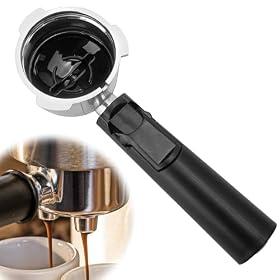
A second portafilter can make back-to-back espresso sessions easier, especially when one portafilter is drying. Check your machine’s fit, portafilter diameter, lug position, basket type, and handle clearance before buying.
Buying a second portafilter is useful when you want one portafilter ready for the next shot while the other is being rinsed and dried. The important detail is that portafilters are not universally interchangeable: the diameter, locking lugs, basket style, and clearance must match your espresso machine.
Start with compatibility
Look for the machine’s exact portafilter size in the owner’s manual or manufacturer documentation. Common diameters exist, but a portafilter can still fail to fit because the lugs, locking angle, or group-head design differ.
Before ordering, confirm:
Portafilter diameter: Match the measured or manufacturer-listed diameter.
Lug shape and position: The tabs must line up with the group head and lock securely.
Locking angle: Some portafilters stop at a different angle even when the diameter appears correct.
Basket depth: A deeper basket may affect dosing and headspace.
Handle clearance: Check that the handle does not hit the machine body, drip tray, or cup.
Machine type: A standard, pressurized, or proprietary brewing system may require a specific portafilter design.
A listing that only says “fits many machines” is not enough. Compare the manufacturer’s compatibility information with your machine’s documentation, and contact the seller if the fit is unclear.
Choose spouted or bottomless
Spouted portafilter
A spouted portafilter directs brewed espresso into one or two streams. It is generally the easiest choice if you want a straightforward duplicate of the portafilter that came with your machine.
Choose one if you:
Want less splashing during normal shots
Usually brew into one or two cups
Prefer a familiar setup
Do not need to watch the entire underside of the coffee puck
The number of spouts does not determine whether a portafilter is compatible. Fit and basket dimensions still matter.
Bottomless portafilter
A bottomless, or naked, portafilter has no spouts. It can make cup placement easier and gives you a clear view of the flow from the basket. It also makes channeling and uneven extraction more obvious, but it can spray if the puck preparation or grind is inconsistent.
Choose one if you want to diagnose distribution and tamping. It is less convenient if your main goal is simply to keep a clean, ready-to-use duplicate on hand.
Product prices and availability are accurate as of the date/time indicated and are subject to change. Any price and availability information displayed on Amazon.com at the time of purchase will apply to the purchase of this product.
Decide whether you need another basket
Many portafilters are sold with a basket, but the included basket may not match the one you already use. Check whether the replacement includes:
The correct rim and locking fit for the portafilter
A pressurized basket is designed to create brewing resistance within the basket and is often supplied with entry-level machines that are intended to work with less precisely ground coffee. A non-pressurized basket relies more on the coffee grind, dose, and puck preparation to create resistance.
If your goal is only to keep the same coffee setup, use a portafilter that accepts the same basket type and size as your original. If you are buying a bottomless portafilter for diagnosis, make sure its included basket is appropriate for your machine and your grinder.
Product prices and availability are accurate as of the date/time indicated and are subject to change. Any price and availability information displayed on Amazon.com at the time of purchase will apply to the purchase of this product.
Consider material and construction
Stainless steel is common because it is durable and easy to rinse. The handle material affects comfort and appearance more than brewing performance, provided the handle is firmly attached and clears the machine.
Pay attention to:
A secure handle connection
Smooth edges around the basket seat
A basket that can be removed for cleaning
A portafilter body that does not flex or feel loose
Finish and dimensions that allow it to sit safely in a portafilter holder or knock box
A heavier portafilter is not automatically better. Fit, basket compatibility, and secure locking are more important than weight alone.
Product prices and availability are accurate as of the date/time indicated and are subject to change. Any price and availability information displayed on Amazon.com at the time of purchase will apply to the purchase of this product.
How a second portafilter helps with drying
After brewing, knock out the puck, remove the basket when practical, and rinse away coffee residue. Dry the portafilter and basket separately rather than storing them wet and assembled. A second portafilter lets one air-dry while the other is used, reducing the temptation to leave coffee oils and standing water in the basket.
Do not place a wet portafilter into a closed cabinet or sealed container. If the manufacturer recommends a particular cleaning method, follow it. Avoid harsh cleaners or abrasive tools that could damage the finish.
A simple buying checklist
Before adding a second portafilter to your cart:
Find the machine’s specified portafilter diameter.
Confirm the replacement is made for your exact machine or a clearly compatible group-head standard.
Compare the lug layout and locking position.
Decide whether you want spouted or bottomless.
Check the included basket’s type, size, and dose range.
Confirm handle and cup clearance.
Check the return policy in case the portafilter does not lock correctly.
When the portafilter feels unusually loose, stops far too early, or requires excessive force to lock, do not brew with it. A poor fit can cause leaks or allow the portafilter to release under pressure. Remove it and verify compatibility with the manufacturer or a qualified service professional.
When the original portafilter may be the better choice
If your machine uses a proprietary brewing system, an unusual locking mechanism, or a portafilter integrated with a special valve, a generic replacement may not be suitable. In that situation, an original replacement or a part specifically listed for your machine is the safer option.
For a conventional machine, a second matching portafilter is usually a sensible accessory when you regularly make several drinks in a row or want a clean, dry setup available without waiting for the first one to air-dry.
FAQ
Can I use any portafilter with my espresso machine?
No. The diameter, lug layout, locking angle, basket design, and machine-specific features all affect compatibility. Use the machine manual or manufacturer’s compatibility information before buying.
Is a bottomless portafilter better than a spouted portafilter?
Neither is universally better. A spouted portafilter is usually simpler and cleaner for routine brewing, while a bottomless portafilter helps reveal uneven distribution and channeling.
Should a second portafilter include a basket?
Check the listing carefully. If it includes a basket, confirm whether it is pressurized or non-pressurized and whether its size and depth match your brewing setup.
Why does a replacement portafilter leak around the group head?
Possible causes include an incorrect portafilter, mismatched lugs, a damaged or dirty group gasket, an overfilled basket, or a portafilter that is not fully locked. Stop using it if it does not fit securely and verify compatibility.