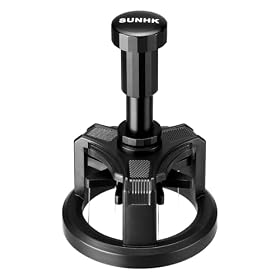
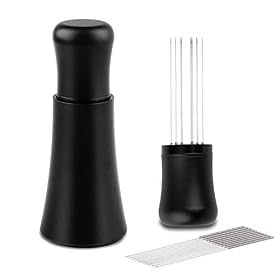
A WDT tool and a properly sized tamper can make espresso puck preparation more consistent. Here is how to choose both without paying for features that do not improve your workflow.
Buying a WDT tool and a better tamper
A WDT tool helps break up clumps and distribute espresso grounds before tamping, while a better tamper helps compress the prepared coffee evenly. The most important buying decision for both is fit: choose a WDT tool that is easy to control and a tamper that matches the inside diameter of your portafilter basket.
Neither accessory can compensate for an incorrectly sized basket, inconsistent grinding, or poor dosing. But the right tools can make puck preparation more repeatable and easier to diagnose.
What a WDT tool does
WDT stands for Weiss Distribution Technique. A WDT tool uses thin needles to stir the grounds in the basket and break up clumps created by the grinder. This can help distribute coffee more evenly before tamping and reduce dense pockets or channels in the puck.
Use it after dosing and before tamping:
Add the ground coffee to the basket.
Insert the needles into the coffee and stir gently, reaching through the full depth of the dose.
Level the surface without pressing down aggressively.
Tamp once with controlled, even pressure.
A WDT tool is not meant to be a whisk used forcefully. Vigorous stirring can spill coffee, disturb the dose, or create an uneven surface that the tamper then compresses poorly.
How to choose a WDT tool
Needle thickness and stiffness
The needles need to be thin enough to move through the coffee without creating large grooves. They also need enough stiffness to remain controlled during use. Extremely flexible needles can bend or wobble, while overly thick needles may move clumps around rather than break them apart.
Look for a tool with securely mounted needles. Replaceable needles are useful if one bends or breaks, but they are not essential if the tool is well made and handled carefully.
Number of needles
More needles can cover the puck quickly, but needle count is less important than control and reach. A tool with fewer needles can work well if you stir methodically through the entire dose. A crowded cluster may be harder to maneuver, especially in a smaller basket.
Needle length and adjustment
The needles should reach deep enough to distribute the coffee near the bottom of the basket, not just fluff the top layer. Some tools allow needle depth adjustment. This can be useful when switching between baskets or doses, but fixed needles are simpler and less likely to move out of adjustment.
Avoid setting the needles so deep that they scrape the basket or make contact with the metal base. The correct depth depends on the basket, dose, and tool design.
Handle and storage
Choose a handle that gives you a steady grip without forcing your fingers close to the needles. A cap or stand can protect the needles and prevent them from damaging other items in a drawer.
A tool that is easy to pick up and store is more likely to become part of your routine. Decorative features matter less than a secure needle mount, comfortable grip, and safe storage.
Product prices and availability are accurate as of the date/time indicated and are subject to change. Any price and availability information displayed on Amazon.com at the time of purchase will apply to the purchase of this product.
How to choose a better tamper
Match the tamper to the basket
Diameter is the critical specification. A tamper should fit inside the basket closely while still moving freely. If it is too small, a ring of loose coffee can remain around the edge of the puck. If it is too large, it may bind against the basket and be difficult to remove cleanly.
Do not select a tamper based only on the portafilter handle size. Portafilters commonly use baskets with different internal diameters, so check the basket manufacturer’s dimensions when possible. Measure the basket or confirm its stated size before buying.
A tamper that is slightly smaller than the basket is generally preferable to one that is too large, but the acceptable clearance depends on the basket’s shape and tolerance.
Flat, convex, or stepped base
A flat base is the straightforward choice for most home espresso users. It compresses the prepared coffee evenly and makes the relationship between distribution and tamping easy to understand.
A convex base has a curved contact surface and may leave the edges of the puck less compressed. Some users prefer this design, but it is more dependent on the basket and preparation technique.
A stepped or ridged base may be marketed as helping with edge clearance or reducing suction. These features are not automatically better. If you are replacing a basic tamper, prioritize accurate fit and a stable, level base before experimenting with a specialized shape.
Calibrated tampers
A calibrated tamper is designed to stop or signal at a particular pressure. This can help new users repeat the same motion, but espresso extraction does not depend on hitting one magical tamping number. Once the grounds are compressed and the puck is firm, grind size and dose usually have a larger effect on flow.
A standard tamper is often the better value if you can tamp level and consistently. Consider a calibrated model if you have difficulty repeating your technique or share the machine with people who use noticeably different pressure.
Handle shape and weight
The handle should let you keep your wrist straight and apply pressure directly downward. A comfortable, stable grip is more useful than a heavy handle by itself.
A heavier tamper can feel more controlled, but weight does not guarantee a level tamp. The base must remain flat, and the tamper should not rock in the basket. Choose a handle that fits your hand and does not force you to grip tightly.
Product prices and availability are accurate as of the date/time indicated and are subject to change. Any price and availability information displayed on Amazon.com at the time of purchase will apply to the purchase of this product.
WDT tool or better tamper first?
If your current tamper is visibly too small, rocks badly, or leaves a thick ring of uncompressed coffee, replace the tamper first. Correct fit is a basic requirement.
If your tamper already fits reasonably well but your grounds arrive clumpy or extraction varies from shot to shot, a WDT tool may offer the more noticeable workflow improvement. It can also help reveal whether uneven distribution is contributing to channeling.
For many home setups, the practical order is:
Confirm the basket is appropriate for the dose.
Use a properly fitting tamper.
Add WDT if the grinder produces clumps or distribution is inconsistent.
Adjust grind size and dose based on the espresso’s flow and taste.
Product prices and availability are accurate as of the date/time indicated and are subject to change. Any price and availability information displayed on Amazon.com at the time of purchase will apply to the purchase of this product.
Common buying mistakes
Buying by portafilter size alone
A stated portafilter size does not always tell you the exact tamper diameter required. Identify the specific basket, especially if you use a precision or aftermarket basket.
Choosing a tool with needles that are too short
Short needles may only rearrange the surface. The tool should allow controlled distribution through the depth of the coffee without scraping the basket.
Treating tamping pressure as the main variable
A level, repeatable tamp matters more than chasing a particular pressure reading. If espresso runs too quickly or too slowly, adjust the grind and verify the dose before repeatedly changing tamp force.
Using WDT after tamping
WDT should happen before tamping. Stirring a compacted puck can create cracks and destroy the uniform surface you are trying to create.
Ignoring basket headspace
A tamper cannot fix an incorrectly filled basket. Too much coffee can press against the shower screen, while too little coffee may leave the puck unstable. Follow the basket’s intended dose range when available.
A simple buying checklist
Before ordering, confirm:
The tamper diameter matches the inside of your actual basket.
The tamper base is flat or shaped intentionally for your basket and workflow.
The handle is comfortable and allows a level downward press.
The WDT needles are securely mounted and long enough for your dose.
The WDT handle is easy to control and has safe storage.
Replacement needles are available if you want long-term serviceability.
The accessories fit your routine rather than adding steps you will skip.
When these accessories will not solve the problem
A WDT tool and tamper cannot correct stale coffee, an unsuitable grind, a damaged basket, a leaking group-head seal, or a grinder that produces a highly inconsistent particle distribution. If shots remain erratic, check the grinder setting, dose, basket cleanliness, machine temperature, and brew timing as well as puck preparation.
If the tamper binds, the basket is damaged, or the WDT needles repeatedly bend because they contact the basket, stop using the accessory and verify compatibility. Replace the part when it is worn or deformed. For electrical, pressure, or machine faults, follow the manufacturer’s instructions and use a qualified technician when necessary.
FAQ
What size tamper do I need for my espresso machine?
Choose the tamper based on the inside diameter of the basket, not just the machine or portafilter size. Check the basket specifications or measure the basket before ordering. The tamper should fit closely without binding.
Is a WDT tool really necessary?
No. A WDT tool is optional, but it can help break up clumps and distribute coffee more evenly before tamping. It is most useful when your grinder produces clumpy grounds or your puck preparation is inconsistent.
How many needles should an espresso WDT tool have?
Needle count is less important than needle thickness, stiffness, reach, and control. A smaller number of well-mounted needles can work effectively if you distribute the grounds through the full depth of the basket.
Is a calibrated tamper better than a regular tamper?
Not necessarily. A calibrated tamper may help users repeat their technique, but level tamping and proper fit matter more than reaching a specific pressure. Grind size, dose, and coffee freshness usually have a greater effect on extraction.
Should I use WDT before or after tamping?
Use WDT before tamping. Stirring after tamping can crack or disturb the compacted puck and make water flow less evenly.