A dual-boiler espresso machine is a major upgrade, but it is not always the best first use of your money. If your shots are inconsistent, sour, bitter, or poorly textured, improving your grinder, coffee measurement, puck preparation, and dialing-in process will often produce a larger improvement for less cost. A dual boiler makes the most sense when you already have a capable setup and regularly need to brew espresso and steam milk at the same time.
Price & Buying · Mon Sep 07
Cost of a dual boiler versus improving technique
A dual-boiler espresso machine can improve temperature control and milk-drink workflow, but better technique and equipment often cost less and solve more basic problems first.
What a dual-boiler machine actually adds
A dual-boiler espresso machine uses separate boilers for brewing water and steam. This design lets the machine maintain brewing temperature while producing steam, rather than switching one boiler between the two jobs.
The main benefits are:
- More convenient steaming while brewing
- Better temperature stability on many machines
- Faster recovery during multiple milk drinks
- Less waiting between pulling a shot and steaming milk
- More control for users who make several drinks in a row
These advantages affect workflow more than basic shot quality. A dual boiler cannot compensate for a poor grind, stale coffee, uneven distribution, or an incorrect dose. It also does not automatically make milk texture better; steam power and your technique still matter.
Espresso grinder upgrade
 SHARDOR Electric Burr Coffee Grinder 2.0, Automatic Coffee Bean Grinder for Home Use, Adjustable Burr…SHARDOR
$39.99 as of
View on Amazon SHARDOR Electric Coffee Grinder, 70g Large Capacity Spice Grinder with Visual Timing Knob for Precise…SHARDOR
$26.99 as of
View on Amazon Ollygrin Flat Burr Coffee Grinder Electric, Compact Coffee Grinder for Home Use, Adjustable Coffee Beans…Ollygrin
$39.99 as of
View on Amazon
Product prices and availability are accurate as of the date/time indicated and are subject to change. Any price and availability information displayed on Amazon.com at the time of purchase will apply to the purchase of this product.
Where technique usually offers better value
Before considering a machine upgrade, check whether the following parts of your workflow are consistent.
Grinder quality and adjustment
The grinder is often more important to espresso results than moving from one machine design to another. Espresso requires fine, repeatable adjustments. If the grinder produces uneven particles, has large adjustment steps, or struggles to grind consistently, a dual boiler may simply make inconsistent shots faster.
A better espresso grinder can help you:
- Adjust flow more precisely
- Reduce channeling caused by uneven grounds
- Repeat a recipe more reliably
- Change settings when switching coffees
If your current grinder is designed mainly for drip coffee or has limited espresso adjustment, upgrading it may be the most effective first step.
Dose and yield control
Use a scale that fits under your cup and measure both the coffee dose and the liquid espresso yield. A simple ratio gives you a repeatable starting point. For example, you might begin with a brew ratio around 1:2, then adjust based on taste rather than changing several variables at once.
The exact ratio is not universal. Light roasts, dark roasts, different baskets, and personal taste may call for different recipes. The important point is consistency: change grind size first, while keeping dose and yield reasonably stable.
Puck preparation
Uneven distribution can create fast channels through the coffee puck. Before blaming the machine, make sure the grounds are distributed evenly, the basket is not overfilled, and the tamper is seating flat.
Useful improvements may include:
- Breaking up clumps before tamping
- Leveling the coffee without disturbing the dose
- Tamping evenly and consistently
- Keeping the basket, shower screen, and portafilter clean
These changes cost little compared with a machine upgrade and can make shot behavior easier to diagnose.
Coffee freshness and storage
Coffee that is too old, poorly stored, or changing rapidly as it degasses can make dialing in difficult. Buy amounts you can use while the coffee remains suitable for espresso, keep it sealed from heat and moisture, and adjust the grinder as the coffee changes.
Espresso measurement scale
 Maestri House S2 Espresso Coffee Scale with Timer 0.1g Precision Shot ScaleMaestri House
$30.39 as of
View on Amazon CULIKEM Coffee Scale with Timer, 0.1g Precision Mini Espresso ScaleCULIKEM
$18.99 as of
View on Amazon Mini Coffee Scale with Timer Automatic, 0.1g/2000g Rechargeable Precision Espresso ScaleStyuanmmy
$21.99 as of
View on Amazon
Product prices and availability are accurate as of the date/time indicated and are subject to change. Any price and availability information displayed on Amazon.com at the time of purchase will apply to the purchase of this product.
When a dual boiler is worth the added cost
A dual boiler becomes easier to justify when your limitation is workflow rather than extraction.
It may be a sensible purchase if you:
- Regularly make several milk drinks in succession
- Want to brew and steam without waiting for the machine to switch modes
- Already own a grinder capable of consistent espresso
- Have a repeatable puck-preparation routine
- Care about temperature control for different coffees
- Expect to keep the machine for many years
- Find your current machine's boiler recovery or steaming delay genuinely frustrating
For a household where one person makes one espresso at a time, the practical benefit may be modest. A well-set-up single-boiler or heat-exchanger machine can produce excellent espresso when the user allows time for its brew-and-steam workflow.
Puck preparation accessory
 Apexstone 53mm Coffee Distributor, Espresso Distribution Tool, Coffee Leveler Compatible with Breville 54mm PortafilterApexstone
$17.99 as of
View on Amazon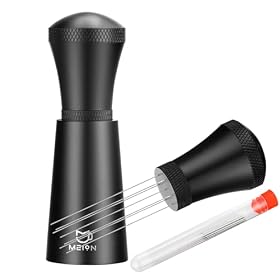 WDT Espresso Distribution Tool Espresso Stirrer Tools for Barista, 0.35mm 7 Needles Espresso Coffee Stirrer…MEION
$16.99 as of
View on Amazon Apexstone 58mm Coffee Distributor, Espresso Distribution Tool, Espresso Distributor Tool, Coffee Leveler 58mmApexstone
$17.99 as of
View on Amazon
Product prices and availability are accurate as of the date/time indicated and are subject to change. Any price and availability information displayed on Amazon.com at the time of purchase will apply to the purchase of this product.
When improving technique is the better purchase
Technique is usually the better investment when:
- Shots vary from one attempt to the next
- You change several variables at once
- The grinder cannot make small enough adjustments
- You do not measure dose or yield
- You are still learning how grind size affects flow
- The machine produces acceptable steam but you struggle with milk texture
- You mainly make straight espresso or only an occasional milk drink
In these cases, buying a dual boiler may hide the real issue without solving it. Start by using one coffee, one basket, and one repeatable recipe. Record the dose, yield, time, and taste. Adjust the grind gradually and avoid judging a machine upgrade until the rest of the process is under control.
Milk steaming pitcher
 Milk Frothing Pitcher, 8.5oz/12oz/20oz/32oz/50oz/66oz Milk Frother Cup Stainless Steel, Espresso Accessories, Milk Steaming Pitchers Coffee…Adorever
$8.99 as of
View on Amazon Milk Frothing Pitcher, 600ml (20oz) Milk Frother Cup Stainless Steel Jug Steaming Pitcher, Milk Coffee…UMUACCAN
$9.99 as of
View on Amazon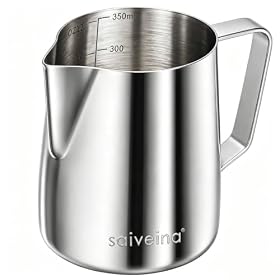 Saiveina Milk Frothing Pitcher, 12oz Milk Frother Cup Stainless SteelSaiveina
$7.55 as of
View on Amazon
Product prices and availability are accurate as of the date/time indicated and are subject to change. Any price and availability information displayed on Amazon.com at the time of purchase will apply to the purchase of this product.
A practical spending order
If your goal is better drinks rather than simply a more advanced machine, consider upgrades in this order:
- Fresh, suitable coffee: A coffee that matches your preferred roast style and brew method is a basic requirement.
- Espresso-capable grinder: Prioritize consistent grinding and useful adjustment control.
- Scale and repeatable recipe: Measure dose and yield rather than relying only on timing or volume.
- Puck-preparation improvements: Address clumping, distribution, tamping, and cleanliness.
- Milk technique: Practice creating a smooth vortex and controlling temperature without overheating the milk.
- Machine upgrade: Consider a dual boiler once the current machine is the clear workflow limitation.
This order is not absolute. If your current machine is unreliable, leaks, cannot maintain safe operating conditions, or cannot produce the steam performance you need, replacement may come sooner.
Compare the real cost, not just the machine price
The purchase cost of a dual boiler is only one part of the decision. Also consider:
- Whether your electrical setup can safely support the machine
- Counter space and water-reservoir access
- Warm-up time and energy use
- Water treatment and regular descaling requirements
- Service availability and replacement-part support
- The cost of a suitable grinder if your current one is inadequate
- Whether you need accessories such as a scale, basket, or milk pitcher
A dual boiler can also increase convenience enough to be worth paying for even when it does not dramatically improve a single espresso. Separate the value into two questions: Will it make better coffee in my current workflow? and Will it make the workflow more convenient? The answer to the second question is often stronger than the first.
A simple decision rule
Choose technique and supporting equipment first if your shots are inconsistent or your grinder and recipe are not yet under control.
Choose a dual boiler if your extraction is already repeatable and the main problem is waiting, recovery, temperature management, or making multiple milk drinks.
If you are uncertain, keep your current machine for a short diagnostic period. Use one coffee, measure every dose and yield, clean the machine, and make controlled grind adjustments. If the drinks improve but the workflow remains frustrating, a dual boiler is addressing the right problem. If the drinks remain inconsistent, spend the upgrade budget on the grinder and preparation process first.
FAQ
Is a dual boiler better than improving espresso technique?
Not automatically. A dual boiler improves temperature management and brew-and-steam workflow, while technique improvements address grind consistency, puck preparation, dosing, and recipe control. If your shots are inconsistent, technique and grinder quality usually deserve attention first.
Does a dual boiler make better espresso?
It can provide useful temperature stability and repeatability, but it does not fix poor coffee, an inconsistent grinder, or uneven puck preparation. A properly dialed-in single-boiler or heat-exchanger machine can make excellent espresso.
Who should buy a dual-boiler espresso machine?
A dual boiler is most useful for people who regularly make multiple drinks, steam milk while brewing, or need faster recovery and more independent temperature control. It is less compelling for someone who makes one straight espresso at a time.
Should I upgrade the grinder before buying a dual boiler?
Usually, yes, if the grinder cannot produce consistent espresso grounds or make small enough adjustments. A dual boiler paired with an unsuitable grinder will still produce inconsistent shots.
Can better technique improve milk drinks without a dual boiler?
Yes. Milk texture depends heavily on steam control, pitcher position, milk volume, and temperature awareness. A dual boiler may provide more continuous steam, but practice and a suitable milk pitcher remain important.