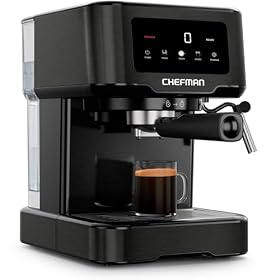
A PID controls temperature directly, while a pressurestat uses steam-boiler pressure as an indirect temperature signal. The better choice depends on the boiler design, drinks you make, and how much temperature control you want.
PID temperature control versus a pressurestat
A PID controls boiler temperature directly with a sensor and electronic controller. A pressurestat controls steam-boiler pressure with a mechanical pressure switch, using pressure as an indirect indication of temperature. Neither approach automatically makes an espresso machine better: the boiler design, temperature control location, heat-exchange layout, and overall machine quality matter just as much.
For most people making mostly straight espresso, a PID offers more visible and adjustable temperature control. A pressurestat can be perfectly suitable on a traditional heat-exchange or dual-boiler machine, especially when you value strong steaming and a familiar commercial-style design.
What a PID does
PID stands for proportional-integral-derivative. In an espresso machine, a temperature sensor monitors the boiler or another heated component. The controller then switches the heating element on and off to keep the measured temperature near the selected target.
The important point is that a PID responds to temperature, not pressure. Depending on the machine, it may control:
A steam boiler, although steam boilers may use a pressurestat instead
A PID display may show a temperature setting, but that number is not always the exact temperature at the coffee puck. Water can lose heat through the group head, portafilter, and brewing path. The machine's design and calibration still affect actual brewing temperature.
Advantages of PID control
Direct temperature adjustment, when the machine allows it
Better repeatability between shots when the system is properly designed
Useful control for different coffee roasts and brewing preferences
Less reliance on timing a cooling or heating flush on some machine designs
A visible temperature readout on many models
Limits of PID control
A PID is not a guarantee of perfect temperature stability. The display may measure boiler temperature rather than brew water at the group. A heat-exchange machine can still require a cooling flush even when it has a PID, depending on its layout and operating temperature.
PID settings can also be confusing. A higher displayed temperature does not always mean the same increase in brew-water temperature across different machines. Treat the control as machine-specific and follow the manufacturer's guidance.
What a pressurestat does
A pressurestat is a pressure-operated switch, usually associated with a steam boiler. As steam pressure rises, the pressurestat turns the heating element off. When pressure falls, it turns the element back on.
Because steam pressure in a boiler corresponds broadly to temperature, the pressurestat indirectly regulates boiler heat. It does not measure brew water temperature at the group head.
Pressurestat-controlled machines are common in traditional heat-exchange and commercial-style espresso designs. They can produce excellent espresso, but the operator may need to understand the machine's heat-up and flushing behavior.
Advantages of a pressurestat
Simple, established control method
Well suited to regulating a steam boiler
Often paired with strong steam performance and traditional machine layouts
Straightforward operation once the machine's flush routine is understood
Replacement or service decisions can be relatively familiar to espresso-machine technicians
Limits of a pressurestat
It controls pressure rather than brew temperature directly
Steam-boiler pressure is only an indirect indicator of brewing temperature
Heat-exchange machines may need a cooling flush before brewing
The pressurestat itself usually does not provide a brew-temperature setting
Pressure changes may not translate into predictable temperature changes at the puck
A pressure gauge is not the same thing as a pressurestat. The gauge displays pressure; the pressurestat switches the heating system based on pressure. Avoid changing pressurestat settings casually, because doing so can affect steam pressure, temperature, electrical operation, and safety.
Product prices and availability are accurate as of the date/time indicated and are subject to change. Any price and availability information displayed on Amazon.com at the time of purchase will apply to the purchase of this product.
PID versus pressurestat: the practical differences
Consideration
PID temperature control
Pressurestat
What it measures
Temperature through a sensor
Boiler pressure
Control type
Electronic temperature feedback
Mechanical pressure switching
Temperature adjustment
Often available through a control or menu
Usually indirect through pressure adjustment or service setup
Brew-temperature repeatability
Often easier to manage, depending on machine design
Depends more heavily on boiler layout and flush technique
Steam performance
Depends on boiler size and settings, not PID alone
Often strong on machines built around a steam boiler
User learning curve
Usually simpler for changing temperature
May require learning flush timing and machine behavior
Best comparison point
Where the PID sensor is located
Which boiler the pressurestat controls
The last row is especially important. A machine advertised as having a PID may use it only for a steam boiler or a thermoblock, while a pressurestat machine may have a very stable brew group and excellent temperature management. Compare the complete heating system instead of treating “PID” as a standalone quality rating.
Product prices and availability are accurate as of the date/time indicated and are subject to change. Any price and availability information displayed on Amazon.com at the time of purchase will apply to the purchase of this product.
Which is better for different espresso machines?
Single-boiler machines
A PID is particularly useful on a single-boiler machine because brewing and steaming require different temperature ranges. The controller can help you return to a brewing temperature after steaming and can make temperature changes more repeatable.
You still need to wait for the machine to switch between brew and steam modes. A PID does not eliminate that workflow limitation.
Heat-exchange machines
Heat-exchange machines keep steam water in a boiler while drawing relatively cooler water through a separate path for brewing. Many use a pressurestat for the steam boiler; some also add a PID.
On this type of machine, the group-head design, boiler temperature, flush routine, and idle time can matter more than the label on the controller. A PID may improve control of the boiler, but it does not necessarily remove the need for a cooling flush.
Dual-boiler machines
A dual-boiler machine can use separate controls for the brew and steam boilers. A PID on the brew boiler can make brew-temperature adjustment convenient, while a pressurestat may still regulate the steam boiler.
For this reason, “PID versus pressurestat” is not always an either-or choice. Some machines use both technologies for different jobs.
Thermoblock and compact machines
On thermoblock machines, a PID may regulate the heated block or water path rather than a conventional boiler. Look for information about temperature recovery, adjustment range, and whether the machine is designed for espresso only or also for steaming.
A PID display by itself does not tell you how quickly the machine can switch between brewing and steaming or how stable the water remains during a shot.
Which one should you choose?
Choose a machine with a PID when:
You want to adjust brew temperature for different coffees
You prefer a clear, repeatable workflow
You often brew straight espresso and want to experiment with temperature
You are comparing single-boiler machines
You want temperature control to be a prominent part of the machine's operation
Choose a pressurestat-based machine when:
You want a traditional heat-exchange or commercial-style design
You make milk drinks frequently and value steam capacity
You are comfortable learning the machine's flush routine
The machine's group head, boiler design, and service support are strong
You do not need frequent user temperature adjustments
If two machines are otherwise similar, a PID is usually the more convenient choice for a beginner who wants adjustable brew temperature. But do not pay for a PID while overlooking grinder quality, basket design, heat-up behavior, water requirements, or repair support.
What to compare before buying
Find out what the control actually regulates
Check whether the PID or pressurestat controls the brew boiler, steam boiler, thermoblock, or another component. A machine can have a PID without offering direct brew-temperature adjustment.
Check the boiler layout
Identify whether the machine is a single boiler, heat exchanger, dual boiler, or thermoblock system. This tells you more about the likely workflow than the presence of a controller alone.
Look for the required flush routine
A heat-exchange machine may require a cooling flush after extended idle time. A PID may change the timing or reduce guesswork, but it may not remove the step. Follow the manufacturer's instructions rather than copying a routine from another machine.
Consider the drinks you make
For mostly espresso, adjustable brew temperature can be valuable. For mostly milk drinks, steam recovery and the ability to brew and steam efficiently may matter more than the controller type.
Check serviceability and safety features
Pressurestats, temperature sensors, heating elements, and control boards can all require diagnosis or replacement. Look for manufacturer support and available parts. Do not open a machine or adjust internal pressure controls while it is connected to power or pressurized; electrical and boiler service should follow the manual or be handled by a qualified technician.
Bottom line
A PID regulates temperature directly and usually gives the user more convenient control over brewing conditions. A pressurestat regulates boiler pressure and is a proven approach, especially for steam boilers and traditional heat-exchange machines. For a buying decision, compare where the control is applied, how the machine manages brew water, whether a flush is required, and how well the machine fits your drink routine—not just whether the front panel says PID.
FAQ
Is a PID better than a pressurestat for espresso?
A PID is often more convenient because it controls temperature directly and may allow brew-temperature adjustment. A pressurestat can still perform very well, particularly on heat-exchange machines, when the boiler and group-head design are well matched and the user follows the correct flush routine.
Can an espresso machine have both a PID and a pressurestat?
Yes. A machine may use a PID for a brew boiler or thermoblock and a pressurestat for a steam boiler. These controls can regulate different parts of the heating system.
Does a PID eliminate the need for a cooling flush?
Not always. The need for a flush depends on the machine's heating layout, group head, idle time, and operating temperature. A PID may improve control but does not automatically eliminate a manufacturer-specified flush routine.
Can I adjust a pressurestat myself?
Do not adjust it casually. Changing steam-boiler pressure can affect temperature, steam performance, electrical operation, and safety. Follow the manufacturer's service instructions or use a qualified espresso-machine technician.