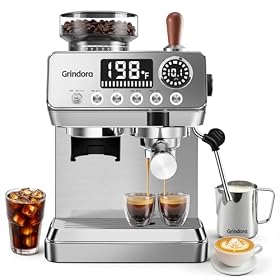
Semi-Automatic vs Super-Automatic Espresso Machines
A semi-automatic machine gives you more control over espresso preparation, while a super-automatic machine handles grinding, dosing, brewing, and often milk at the touch of a button. The better choice depends on whether you value hands-on control or repeatable convenience.
A semi-automatic espresso machine is the better choice if you want to adjust the grind, dose, tamp, and milk texture yourself. A super-automatic espresso machine is usually better if you want coffee drinks with minimal effort and consistent results from one user to the next.
The main tradeoff is simple: semi-automatic machines demand more skill and accessories, while super-automatic machines automate more of the process and give you fewer ways to fine-tune it.
What is a semi-automatic espresso machine?
A semi-automatic machine uses a portafilter that you fill and lock into the group head. You typically need to:
Grind coffee beans.
Measure the dose into the basket.
Distribute and tamp the grounds.
Start and stop the extraction, unless the machine has programmed buttons.
Steam and texture milk separately for drinks such as lattes and cappuccinos.
Knock out the used puck and clean the portafilter.
The machine controls water heating and pumping, but you control much of the preparation. This makes a semi-automatic setup more involved, but it also lets you change the recipe as you learn.
A separate espresso grinder is usually important. A basic blade grinder or an inconsistent grinder can make it difficult to get repeatable shots, even if the machine itself is capable.
What is a super-automatic espresso machine?
A super-automatic machine usually combines a grinder, dosing system, brewing mechanism, and waste container in one appliance. You select a drink, and the machine performs most of the steps automatically.
Depending on the design, it may also dispense frothed milk through an integrated milk system or a separate milk container. Some models let you adjust drink volume, coffee strength, temperature, grind level, or milk quantity, but the range of adjustment is generally narrower than with a semi-automatic setup.
Super-automatic does not mean maintenance-free. The machine still needs regular rinsing, emptying, cleaning, and descaling according to the manufacturer’s instructions. Milk systems need especially prompt cleaning because milk residue can harden or become unhygienic.
Product prices and availability are accurate as of the date/time indicated and are subject to change. Any price and availability information displayed on Amazon.com at the time of purchase will apply to the purchase of this product.
Key differences at a glance
Factor
Semi-automatic
Super-automatic
Ease of use
Requires a hands-on workflow
Usually starts with a button or menu selection
Espresso control
High control over grind, dose, tamp, and extraction
Limited to the settings the machine provides
Grinder
Usually purchased separately
Usually built in
Milk drinks
Requires manual steaming and pouring
Often automated or assisted
Learning curve
Steeper
Lower for basic drinks
Cleanup
Portafilter, basket, drip tray, and steam wand need attention
Internal brewing and milk components add cleaning routines
Speed for multiple users
Can be slower during preparation
Convenient when several people want drinks
Customization
Broad, especially with a capable grinder
Convenient adjustments, but less hands-on flexibility
Repair considerations
More separate components, often easier to replace individually
Product prices and availability are accurate as of the date/time indicated and are subject to change. Any price and availability information displayed on Amazon.com at the time of purchase will apply to the purchase of this product.
Choose semi-automatic if you want control
A semi-automatic machine makes more sense when you enjoy the preparation process or want to improve your espresso-making skills. You can change the coffee dose, grind size, yield, extraction time, and milk texture instead of accepting the machine’s preset workflow.
This option is also useful if you frequently buy different beans. Lighter, darker, and decaffeinated beans may need different grind and dosing adjustments. A good grinder and a consistent technique let you adapt more easily.
The drawbacks are the extra equipment and the learning curve. In addition to the machine, you may need a grinder, scale, tamper, dosing accessories, and a way to dispose of used grounds. Small changes in grind size or tamping can noticeably change the result.
Product prices and availability are accurate as of the date/time indicated and are subject to change. Any price and availability information displayed on Amazon.com at the time of purchase will apply to the purchase of this product.
Choose super-automatic if you want convenience
A super-automatic machine is often the practical choice for busy households, offices, or anyone who wants coffee without a preparation ritual. It can be especially convenient when different people want different drinks and not everyone wants to learn espresso technique.
It also reduces the number of separate purchases. The built-in grinder and automated brewing system take up less counter space than a machine-and-grinder setup, although the appliance itself may be taller or deeper than expected.
The compromises are reduced control and more specialized cleaning. The internal grinder and brewing components determine much of the result. If the machine’s settings do not suit your beans or preferred drink, there may be less you can do than with a separate grinder and portafilter.
Product prices and availability are accurate as of the date/time indicated and are subject to change. Any price and availability information displayed on Amazon.com at the time of purchase will apply to the purchase of this product.
Compare the specifications that affect the decision
Grinder adjustment
On a super-automatic machine, look for useful grind and strength adjustments rather than focusing only on the number of settings advertised. The important question is whether the available range helps you prepare the beans and drink sizes you prefer.
With a semi-automatic machine, grinder quality and adjustment are separate purchase decisions. A stepless or finely adjustable espresso grinder can make dialing in easier, but the right choice depends on your budget, workflow, and tolerance for manual adjustment.
Milk system
A manual steam wand gives you the most control over milk texture, but it takes practice and requires cleaning after each use. An automatic milk system is faster and easier for repeatable drinks, but it may offer less control over texture and adds tubing or milk-contact parts that need careful cleaning.
If you mostly drink black coffee, a complicated milk system may add cost and maintenance without much benefit.
Heating system and drink workflow
The heating design affects how quickly a machine can switch between brewing and steaming. Manufacturer descriptions may use terms such as single boiler, heat exchanger, thermoblock, or dual boiler. These designs can affect waiting time, simultaneous brewing and steaming, size, energy use, and price.
For occasional milk drinks, a simpler heating system may be adequate. If you make several milk drinks in a row, look more closely at the machine’s stated workflow instead of assuming that every machine can brew and steam at the same time.
Water tank, bean hopper, and waste capacity
Larger tanks and containers reduce refilling and emptying, but they also increase footprint. Check whether the water tank, drip tray, bean hopper, and grounds container can be removed easily in the space where the machine will sit.
A large bean hopper is not automatically better if you regularly switch between coffee beans. A smaller hopper or a bypass chute may be more convenient for households that use different beans or decaf.
Cleaning and service access
Cleaning should be part of the buying decision, not an afterthought. Compare:
How the portafilter, basket, and steam wand are cleaned on a semi-automatic machine.
Whether a super-automatic brew group can be removed for rinsing.
How the milk path is flushed and disassembled.
How often the manufacturer calls for descaling.
Whether filters, gaskets, cleaning tablets, and other maintenance parts are available.
Follow the manual for water hardness, cleaning products, lubrication, and descaling. Using the wrong product or skipping required maintenance can affect performance and may complicate warranty service.
Which makes better espresso?
Neither category guarantees better espresso by itself. A semi-automatic machine offers more potential control, but the result depends heavily on the grinder, beans, dose, water, and technique. A super-automatic machine can produce convenient and consistent drinks, but its preset recipe and integrated components limit how much you can adjust.
If you want to learn how espresso changes with grind size and extraction time, choose semi-automatic. If you prioritize a repeatable drink with minimal preparation, choose super-automatic.
Claims about pump pressure alone are not a reliable way to compare machines. Proper grinding, an appropriate dose, stable brewing conditions, and a suitable recipe matter more than a headline pressure number.
Which is easier to maintain?
The answer depends on what kind of maintenance you prefer.
A semi-automatic machine has visible, manual cleanup: rinse the portafilter and basket, wipe and purge the steam wand, empty the drip tray, and backflush or clean as directed. A separate grinder also creates loose grounds and requires its own cleaning.
A super-automatic machine reduces loose coffee handling but adds internal cleaning cycles and components. You may need to rinse the brewing system, empty the grounds container, clean the milk circuit, clean the grinder area, and run manufacturer-specified cleaning or descaling programs.
For either type, regular maintenance is usually easier than trying to fix poor flow, sour shots, weak drinks, or milk-system problems later.
You want a drink quickly with minimal hands-on work.
Several people need different drinks or strength settings.
You prefer an integrated grinder and a simpler daily workflow.
You value convenience more than maximum recipe control.
You are willing to follow automated cleaning and milk-system maintenance routines.
If you are undecided, consider how you will use the machine on an ordinary weekday rather than how you imagine using it on a relaxed weekend. A semi-automatic machine is rewarding when you want the process; a super-automatic machine is often the better fit when the process is the part you want to skip.
FAQ
Is a semi-automatic or super-automatic machine better for beginners?
A super-automatic machine is usually easier for a beginner who wants a drink quickly. A semi-automatic machine has a steeper learning curve, but it is a better fit for someone who wants to learn espresso preparation and adjust the result.
Do I need a grinder for a semi-automatic espresso machine?
Usually, yes. A separate espresso grinder is generally needed for consistent grind adjustment and repeatable shots. Pre-ground coffee can work with some setups, but it gives you less control and may not stay fresh as long.
Are super-automatic espresso machines easier to clean?
They can reduce manual preparation, but they are not maintenance-free. Along with rinsing the drip tray and grounds container, you may need to clean the internal brewing path, grinder area, and milk system according to the manual.
Can a super-automatic machine make milk drinks?
Many can, but the milk process varies. Some use a manual or assisted frothing wand, while others use an automatic milk container or tube. Check the specific cleaning procedure and the amount of milk-texture control before buying.
Is a semi-automatic machine worth it if I mostly drink lattes?
It can be worthwhile if you want control over espresso and milk texture and do not mind steaming milk manually. If you want a latte with minimal preparation, a super-automatic machine with a suitable milk system may fit better.