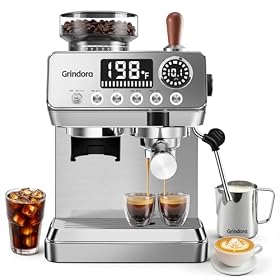
An entry semi-automatic espresso machine is usually the simpler, lower-cost choice, while a midrange heat-exchanger machine is built for stronger steaming performance and more café-like workflow. The right choice depends mainly on how often you make milk drinks, how much control you want, and whether you are willing to manage a more involved machine.
An entry semi-automatic espresso machine is usually the better fit for occasional espresso and a smaller budget. A midrange heat-exchanger (HX) machine makes more sense if you regularly prepare milk drinks, want stronger steam power, and are comfortable with a larger machine and a more involved workflow.
The important caveat is that “entry semi-auto” covers several designs. It may use a single boiler, a thermoblock, or another compact heating system. Check the specific machine’s specifications rather than assuming every entry model behaves the same way.
The main difference: heating and steaming
A midrange HX machine uses one boiler with a heat exchanger. The boiler stays hot enough for steam while fresh water passes through a separate path for brewing. This lets you brew espresso and steam milk with less waiting and generally provides more powerful, sustained steam.
An entry machine may use a single boiler or thermoblock. Many require you to brew first, wait for the machine to switch to steam temperature, steam the milk, and then wait again before brewing another shot. Some compact machines steam adequately, but they are usually less comfortable when making several milk drinks in a row.
HX machines are not automatically better at every task. Their temperature behavior can be more dependent on warm-up time, flush routines, and the manufacturer’s recommended operating procedure. A simpler entry machine may be easier to understand for a new user.
Entry semi-auto: strengths and tradeoffs
Why choose one
An entry semi-auto is often the sensible choice when you:
Are still deciding whether espresso preparation will become a regular hobby
Many entry machines also make it easier to learn the fundamentals: grinding, dosing, tamping, and shot timing. A good grinder can make a larger difference to espresso quality than moving immediately to a more expensive machine.
Where it may feel limiting
The limitations usually appear during milk-drink preparation. You may need to wait between brewing and steaming, and the steam wand may take longer to texture milk. If you regularly make multiple cappuccinos or lattes, this can become frustrating.
Compact machines can also have smaller water reservoirs, drip trays, and boilers or heating systems. Those details do not necessarily affect espresso quality, but they can affect how often you refill, empty, or pause during a session.
Product prices and availability are accurate as of the date/time indicated and are subject to change. Any price and availability information displayed on Amazon.com at the time of purchase will apply to the purchase of this product.
Midrange HX: strengths and tradeoffs
Why choose one
A midrange HX machine is worth considering if you:
Make several milk drinks in one session
Want stronger, longer-lasting steam
Prefer a more traditional espresso-machine workflow
Have enough counter space for a larger machine
Expect to keep the machine for years and use it frequently
Enjoy adjusting technique rather than relying on one-touch automation
An HX machine can make the transition from home brewing to more hands-on espresso preparation feel smoother, especially when steaming is a major part of your routine.
What you give up
HX machines typically cost more and can require more attention. They often need a meaningful warm-up period, and the correct brew routine may include a flush before pulling a shot. The exact process varies by design, so follow the manufacturer’s instructions rather than applying a generic flush rule.
A larger machine may also use more counter depth and height, particularly if you need room to fill a top-mounted reservoir or open the machine’s controls. Plumbing options, gauges, vibration or rotary pump designs, and boiler controls vary widely, so do not treat “HX” as a complete specification.
Espresso machine descaling and maintenance supplies
Product prices and availability are accurate as of the date/time indicated and are subject to change. Any price and availability information displayed on Amazon.com at the time of purchase will apply to the purchase of this product.
Side-by-side decision guide
Consideration
Entry semi-auto
Midrange HX
Best for
Occasional espresso and one milk drink at a time
Frequent milk drinks and larger sessions
Steam workflow
May require a wait between brewing and steaming
Usually better suited to brewing and steaming in the same workflow
Warm-up expectations
Often shorter, but model-dependent
Usually needs a longer warm-up for consistent operation
Learning curve
Generally simpler
More technique and machine-specific procedures
Counter space
Usually more compact
Often larger and heavier
Maintenance
Simpler in many cases
More components and procedures to maintain
Upgrade value
Good starting point
Better fit for committed, frequent users
These are category-level tendencies, not guarantees. Read the machine’s specifications for warm-up guidance, steam controls, reservoir capacity, boiler or heating-system design, and electrical requirements.
Which one makes better espresso?
Neither category guarantees better espresso. Espresso quality depends heavily on the grinder, coffee freshness, dose, yield, water, basket, and dialing-in technique.
A well-adjusted grinder paired with an entry machine can produce better shots than an HX machine paired with inconsistent grounds. If your current grinder is a basic blade grinder or an espresso-inconsistent grinder, upgrading that first may be the more noticeable improvement.
The HX advantage becomes more apparent in workflow and milk steaming than in the basic quality of a single espresso shot. It gives an experienced user more capacity and steam performance, but it does not remove the need to learn extraction.
Consider the grinder before moving up
Budget for a capable espresso grinder in either setup. Espresso requires fine, repeatable adjustments, and small grind changes can significantly affect shot speed and flavor.
If choosing between a more expensive machine and a better grinder, many beginners should prioritize the grinder unless they already have a suitable one. A midrange HX machine paired with an inadequate grinder can be an expensive way to preserve the same extraction problem.
Also consider whether the machine accepts standard baskets and portafilter sizes. Common accessories are easier to find and replace, but compatibility must be confirmed from the manufacturer’s specifications.
A practical buying decision
Choose an entry semi-auto when you want a manageable introduction to espresso, usually make one drink at a time, or are unsure how deeply you will get into the hobby. Put the savings toward a suitable grinder, fresh coffee, and basic maintenance supplies.
Choose a midrange HX when milk drinks are central to your routine, you regularly serve more than one person, and you value steam performance enough to accept a longer warm-up and more involved care.
If you mostly drink straight espresso, an HX machine may be unnecessary. If you make several milk drinks every morning, the entry machine’s waiting and steaming limitations may become a daily annoyance.
Before buying, check these specifications
Heating system: Confirm whether the entry machine uses a single boiler, thermoblock, or another design.
Steam control: Check whether it has a usable manual steam wand and how the manufacturer describes its steam operation.
Warm-up guidance: Look for the stated or recommended warm-up procedure, not just a marketing claim about fast heating.
Water reservoir and drip tray: Smaller capacities mean more frequent refilling and emptying.
Portafilter and basket compatibility: This affects replacement parts and accessory choices.
Electrical requirements: Verify voltage, plug type, and circuit requirements for your location.
Service access: Confirm how the manufacturer recommends descaling, backflushing, gasket replacement, and other routine maintenance.
Physical dimensions: Measure counter depth, height, clearance above the machine, and space for the grinder.
Bottom line
An entry semi-auto is the better value for learning espresso and making occasional drinks. A midrange HX is the better workflow choice for frequent milk drinks and users who want stronger steaming with fewer pauses. Buy the HX for its capacity and steam behavior—not simply because it is more expensive—and do not overlook the grinder, water quality, maintenance requirements, and available counter space.
FAQ
Is an HX machine better than an entry-level espresso machine?
It is usually better for frequent milk drinks, stronger steaming, and serving several people. It is not automatically better for a single espresso, where the grinder, coffee, water, and technique often matter more.
Do HX espresso machines need a long warm-up?
Many do, because the group head and other metal components need time to reach a stable operating temperature. Follow the manufacturer’s warm-up and flush instructions rather than relying on a generic time or procedure.
Should I buy a better grinder or upgrade from an entry machine?
If your grinder cannot make consistent, fine adjustments for espresso, a better grinder is often the more useful first upgrade. An HX machine cannot compensate for poorly ground coffee.
Can an entry semi-automatic machine make milk drinks?
Yes. The main limitation is often workflow: some entry machines need time to switch between brewing and steaming, and compact steam systems may be slower when preparing multiple drinks.