A moka pot can replace an espresso machine for strong, concentrated coffee, but it does not produce true espresso. It brews on a stovetop using steam pressure, while an espresso machine forces water through finely ground coffee at much higher pressure. Choose a moka pot for lower cost, simple storage, and a traditional coffee routine; choose an espresso machine for real espresso, crema, precise control, and easier milk-based drinks.
Comparisons · Mon Sep 07
Moka pot as an alternative to a machine
A moka pot can be a practical alternative to an espresso machine if you want strong, concentrated coffee without the cost and maintenance of a machine. It does not make true espresso, though, and it is less convenient for repeatable shots or café-style milk drinks.
What a moka pot makes
A moka pot has three main sections: a bottom chamber for water, a funnel-shaped basket for coffee, and an upper chamber that collects the brewed coffee. As the water heats, pressure pushes it through the coffee and into the upper chamber.
The result is concentrated and full-bodied, usually stronger than drip coffee. It can work well on its own, with milk, or as the base for drinks such as a moka-style latte. However, moka-pot coffee is not technically espresso because the brewing pressure, extraction method, and texture are different.
You should not expect the thick crema, syrupy body, or shot-by-shot adjustability associated with an espresso machine.
Moka pot brewer
 Primula Classic Stovetop Espresso and Coffee Maker, Moka Pot for Italian and Cuban Café Brewing,…Primula
$19.99 as of
View on Amazon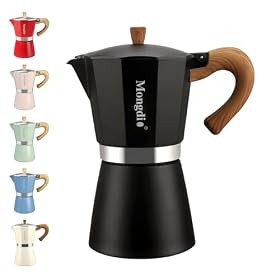 Mongdio Stovetop Espresso Maker Moka Pot, Cuban Coffee Maker Stove top coffee maker Moka Italian…Mongdio
$20.89 as of
View on Amazon Bialetti Moka Express Iconic Italian Stovetop Espresso Maker (Natural Silver, 6 Cups)Bialetti
$54.99 as of
View on Amazon
Product prices and availability are accurate as of the date/time indicated and are subject to change. Any price and availability information displayed on Amazon.com at the time of purchase will apply to the purchase of this product.
Moka pot versus espresso machine
Cost and space
A moka pot is generally the simpler and less expensive option. It needs the pot, a heat source, coffee, and a way to grind the beans. It takes up little counter space and is easy to store in a cabinet.
An espresso setup usually needs the machine, a grinder capable of producing a consistent fine grind, and accessories such as a tamper and milk pitcher. Some machines also require more counter space and a nearby electrical outlet.
Brewing control
Espresso machines offer more control over variables such as grind size, dose, water temperature, brew time, and pressure. That control makes it possible to adjust a shot when it tastes sour, bitter, weak, or harsh.
A moka pot is less adjustable. You can change the coffee dose, grind, water amount, heat level, and brewing time, but the design provides fewer precise controls. It is usually easier to get a drinkable result, but harder to fine-tune the brew to the same degree as espresso.
Speed and routine
A moka pot can brew in a few minutes once the water is heated, but it requires a stovetop or other compatible heat source. The coffee basket should be filled correctly, and the pot should be removed from heat when brewing is nearly complete.
An espresso machine can be faster for repeated drinks once it is warmed up and ready. However, setup, grinding, tamping, brewing, steaming, and cleanup can take longer than expected, especially when making several milk drinks.
Milk drinks
A moka pot can make a strong coffee base for a latte-like or cappuccino-style drink, but it cannot steam milk by itself. You would need a separate milk frother, steam wand, or another method of heating and aerating the milk.
An espresso machine with a steam wand is the better choice if you regularly want true cappuccinos, lattes, or flat whites. Entry-level machines may require practice to produce smooth microfoam, while automatic machines can simplify the process at the cost of less manual control.
Cleanup and maintenance
Moka-pot cleanup is straightforward: let the pot cool, separate the parts, empty the used grounds, rinse the components, and let them dry. Avoid sealing it while wet, and follow the manufacturer’s guidance for cleaning the filter and gasket.
Espresso machines need more routine care. Depending on the design, you may need to flush the group head, clean the portafilter and basket, purge and wipe the steam wand, empty the drip tray, backflush, and descale when required. A machine that is neglected can develop poor flow, leaks, blocked parts, or off flavors.
Moka pot replacement gasket and filter
 Bialetti Spare Parts, Includes 3 Gaskets and 1 Plate, Compatible with Moka Express, Fiammetta, Break,…Bialetti
$8.39 as of
View on Amazon DITOSH 2 Pcs Filter with 3 Pcs Silicone Gasket Seals for 12 Cup Stovetop Espresso…DITOSH
$6.99 as of
View on Amazon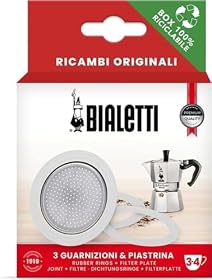 Bialetti Spare Parts, Includes 3 Gaskets and 1 Plate, Compatible with Moka Express, Fiammetta, Break,…Bialetti
$9.00 as of
View on Amazon
Product prices and availability are accurate as of the date/time indicated and are subject to change. Any price and availability information displayed on Amazon.com at the time of purchase will apply to the purchase of this product.
When a moka pot is the better alternative
A moka pot is a good fit when you:
- Want concentrated coffee without buying a full espresso setup
- Have limited counter space
- Prefer a manual, low-electronics brewing method
- Make one or two coffee servings at a time
- Mostly drink black coffee or add a small amount of milk
- Do not need café-style crema or precise espresso extraction
- Want a brewer that can be stored away after use
It is also useful as a backup if an espresso machine is being repaired or if you want coffee while traveling somewhere with a suitable stovetop or cooktop.
Coffee grinder for moka pot
 Agilive Manual Coffee Grinder, Adjustable Grinding Settings, Stainless Steel Burrs, Portable Hand-Cranked Coffee Grinder, For…Agilive
$36.99 as of
View on Amazon CEVING Mini Manual Coffee Grinder With 40 Adjustable Settings, BlackCEVING
$17.99 as of
View on Amazon Kaffe Electric Burr Coffee Grinder (5.5oz) w/Adjustable Coarseness Settings - Flat Burr - [New Upgraded…Kaffè
$24.95 as of
View on Amazon
Product prices and availability are accurate as of the date/time indicated and are subject to change. Any price and availability information displayed on Amazon.com at the time of purchase will apply to the purchase of this product.
When an espresso machine is worth choosing instead
An espresso machine is the better option when you:
- Specifically want real espresso shots
- Regularly prepare lattes, cappuccinos, or Americanos
- Want to adjust extraction variables precisely
- Need repeatable results for multiple drinks
- Care about crema and espresso-style texture
- Are willing to learn grinder and brewing technique
- Have room for a machine and grinder
The grinder matters in either setup, but it matters especially for espresso. Espresso machines generally need a grinder with fine, consistent adjustment. A basic blade grinder often produces an uneven mix of fine particles and larger pieces, making espresso difficult to dial in.
Milk frother for moka-pot drinks
 FUOCCI Electric Moka Pot with Milk Frother, Espresso Maker, 3-Cup WhiteFUOCCI
$64.99 as of
View on Amazon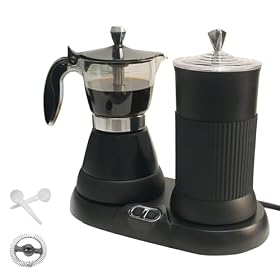 DITOSH Espresso Maker with Milk Frother Electric Moka Pot 2-in-1 Espress Machine Aluminium One-Touch Operation…DITOSH
$69.99 as of
View on Amazon Vaolvpant Electric Espresso Machine with Milk Frother 2 in 1 EfficientVaolvpant
$68.99 as of
View on Amazon
Product prices and availability are accurate as of the date/time indicated and are subject to change. Any price and availability information displayed on Amazon.com at the time of purchase will apply to the purchase of this product.
How to get better results from a moka pot
Use the right grind
Use a grind that is finer than drip coffee but not as fine as most espresso grinds. A grind that is too fine can restrict flow and make the coffee bitter or harsh. A grind that is too coarse can produce weak, thin coffee.
Do not tamp the basket
Fill the basket evenly and level the grounds without pressing them down. Tamping can restrict the flow of water and may increase the risk of an overly bitter brew or excessive pressure.
Start with appropriate water and heat
Follow the moka pot manufacturer’s instructions. Many brewing methods use hot water in the lower chamber to shorten the time the coffee sits over heat, but the pot’s design and handle materials should determine what is appropriate.
Use moderate heat rather than the highest setting. Once the coffee begins flowing steadily, watch the pot closely and remove it from heat when the flow becomes light or the upper chamber is nearly filled. Do not leave a moka pot unattended.
Use the correct size
Moka pots are designed to brew a particular volume. A larger pot is not always practical if you normally make one small serving, because reducing the water and coffee below the basket’s intended capacity can affect the result.
Common problems and fixes
The coffee tastes bitter or burnt
Try a coarser grind, lower heat, or a shorter time on the burner. Leaving the pot on high heat after brewing has finished can overcook the coffee. Old coffee, excessive heat, and a dirty filter can also contribute.
The coffee tastes weak
Check that the basket is filled correctly and that the grind is not too coarse. Make sure the gasket, filter plate, and funnel are installed properly. Do not dilute the finished coffee with more water than necessary if you want a concentrated drink.
Coffee is leaking around the seam
Turn off the heat and let the pot cool before inspecting it. Check that the gasket is seated correctly, the filter plate is clean, and the two chambers are screwed together evenly. A worn, hardened, or damaged gasket should be replaced with the correct part for the pot.
Do not continue using the pot if the threads, safety valve, handle, or body are damaged. Pressure-brewing cookware should be replaced when its structural parts are no longer reliable.
The pot sputters or produces very little coffee
Inspect the filter basket and outlet for blocked coffee oils or particles. Clean the filter plate and confirm that the water level is within the manufacturer’s limit. Excessively fine coffee or tightly packed grounds can restrict flow.
If the safety valve appears blocked or the pot behaves unusually, stop using it and follow the manufacturer’s cleaning or replacement instructions rather than trying to modify the valve.
Bottom line
A moka pot is a sensible alternative to an espresso machine when your priority is inexpensive, concentrated coffee with minimal equipment. It is not a substitute for true espresso, precise extraction control, or built-in milk steaming. If you mainly drink strong coffee and value simplicity, choose a moka pot. If you want espresso-based drinks and are prepared to manage a grinder and machine maintenance, an espresso machine is the more capable choice.
FAQ
Can a moka pot make espresso?
No. A moka pot makes concentrated stovetop coffee, not technically espresso. It uses a different brewing method and lower pressure, so the flavor, body, and crema will not be the same.
Is moka-pot coffee stronger than regular coffee?
It is usually more concentrated and fuller-bodied than drip coffee, but perceived strength also depends on the coffee dose, serving size, roast, and how much water or milk you add.
Do I need an espresso grinder for a moka pot?
Not usually. Moka pots generally work best with a grind finer than drip coffee but coarser than a typical espresso grind. The exact setting depends on the grinder and the brewer.
Can I use a moka pot on an induction cooktop?
Only if the moka pot is made from an induction-compatible material or is specifically labeled for induction. Some aluminum moka pots will not work directly on induction and may require a compatible adapter, if the manufacturer permits one.
Is a moka pot easier to maintain than an espresso machine?
Generally, yes. A moka pot usually needs rinsing, drying, and occasional cleaning or gasket replacement. Espresso machines have more components and may require regular flushing, steam-wand cleaning, backflushing, and descaling.