If your espresso machine pump suddenly sounds loud and then stops, stop repeated brewing attempts. The usual causes are an empty or poorly seated reservoir, a blocked water filter or hose, trapped air, scale, or a pump that is overheating or failing.
A pump that sounds unusually loud and then stops is usually being starved of water or blocked downstream. Turn the machine off, let it cool, and check the reservoir, water filter, inlet, hose, and scale before assuming the pump itself has failed. Avoid repeatedly running the pump dry, because that can worsen the problem.
Start with a safe reset
Stop the brew cycle and switch the machine off.
Unplug it and let it cool for at least 15–30 minutes.
Remove the portafilter and make sure the brew group is not under pressure.
Check for water around the machine, under the reservoir, and near the steam wand.
Refill the reservoir with fresh water and try one brief test only.
If you smell burning, see melted wiring, notice smoke, or the machine trips a breaker, unplug it and stop troubleshooting. Electrical repairs should be handled by a qualified technician.
Check the water supply first
A vibration pump becomes noticeably louder when it cannot receive enough water. Confirm that:
The reservoir contains enough water.
The tank is pushed fully into position.
The reservoir valve opens when the tank is seated.
Any floating water-level sensor can move freely.
The machine is sitting level if its design depends on a tank sensor or valve.
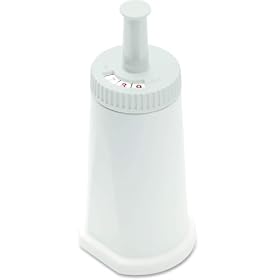
Some machines have a water filter in the reservoir. Remove and inspect the filter according to the manufacturer’s instructions. A filter that is overdue, swollen, clogged, or installed incorrectly can restrict the inlet. If the machine operates normally without the filter, replace the filter with the correct type rather than continuing to use it.
Do not operate the machine without a filter if the manual says one is required for a specific function. Use the manufacturer’s instructions for filter removal and replacement.
Product prices and availability are accurate as of the date/time indicated and are subject to change. Any price and availability information displayed on Amazon.com at the time of purchase will apply to the purchase of this product.
Look for an airlock or blocked inlet
A long period without use, an empty reservoir, or a filter change can allow air into the pump. The pump may make a harsh rattling or buzzing sound but fail to produce water.
With the machine cool and the reservoir full, open the hot-water outlet or steam valve if the manual permits water dispensing through that circuit. Run it only in short intervals, watching for a steady flow. Stop if the pump becomes excessively hot or the machine shuts down again.
If water begins flowing normally, close the valve and try a short brew-cycle test without coffee in the portafilter. If there is still no flow, do not keep cycling the pump. The machine may have an obstruction or a pump problem.
Never force water into the machine with a syringe, pressurized bottle, or external pump unless the manufacturer specifically instructs you to do so.
Product prices and availability are accurate as of the date/time indicated and are subject to change. Any price and availability information displayed on Amazon.com at the time of purchase will apply to the purchase of this product.
Check the hose, screen, and coffee path
Remove the portafilter and run a brief brew test. This separates a pump or inlet problem from a blocked coffee path.
Water flows without the portafilter: The coffee may be ground too finely, overdosed, tamped excessively, or the basket may be clogged. Clean the basket and shower screen.
Water does not flow without the portafilter: The restriction is more likely in the tank filter, inlet, hose, flow-control component, shower screen, or internal water circuit.
Water flow pulses and the pump remains loud: Air may still be present, or the inlet may be partly restricted.
Water leaks into the drip tray or underneath the machine: A valve, hose, or seal may be leaking and preventing proper pressure or flow.
Clean removable parts only as directed. Do not poke deep into internal passages with wire, and do not remove panels while the machine is plugged in.
Consider scale buildup
Mineral scale can restrict narrow passages and cause the pump to work harder. This is more likely when the machine has hard water, a missed maintenance cycle, or reduced flow over time.
Use a descaler approved for your machine and follow the exact dilution, contact time, and rinsing procedure in the manual. Some manufacturers prohibit certain acids or cleaning products. Descaling will not repair a failed pump, and it may reveal an existing leak in a machine with severe buildup, so monitor the machine during and after the process.
Backflushing is a separate cleaning procedure from descaling. Use the cleaning tablet and blank basket only if your machine’s instructions call for them; do not assume every machine uses the same procedure.
When the pump itself may be failing
The pump is more suspect when:
The reservoir is full and correctly seated.
The filter and inlet are clear.
The machine has been primed according to its instructions.
There is no visible leak.
Water still does not flow from the hot-water outlet or brew group.
The pump becomes loud immediately and shuts off repeatedly.
The machine works briefly after cooling, then stops again.
A thermal protector may shut the pump down after overheating, but repeated resets are not a repair. A failing pump, blocked internal valve, damaged hose, or control fault requires diagnosis inside the machine. Because espresso machines combine mains electricity, heat, and pressurized water, have a qualified appliance technician inspect it unless the manufacturer provides a user-serviceable replacement procedure.
Repair or replace the machine?
A filter, reservoir valve, seal, or descaling issue is often a reasonable maintenance repair. A pump replacement can also be practical on a repairable machine, but the correct pump must match the machine’s electrical rating, fittings, and control system. Do not buy a “universal” pump based only on appearance.
Service is usually the better next step when the machine is still under warranty, has a built-in boiler or complex electronics, or shows electrical symptoms. Replacement may make more sense for an older entry-level machine with multiple problems, such as a leaking boiler, damaged controls, and a failed pump.
After any repair, confirm that the machine produces steady water from the hot-water outlet and brew group before making coffee. If the pump remains loud, overheats, leaks, or shuts off, discontinue use.
FAQ
Why is my espresso machine pump suddenly so loud?
The most common reasons are an empty or poorly seated reservoir, a clogged water filter, trapped air, scale buildup, or a restriction in the inlet or water circuit. A failing pump is possible if these checks do not restore water flow.
Can running an espresso pump dry damage it?
Repeated dry running can overheat or damage some pumps. Stop the machine when it becomes loud without producing water, let it cool, and follow the manufacturer’s priming procedure rather than continuing to run it.
Why does the pump stop after a few seconds?
The pump may be overheating, losing its water supply, encountering a blockage, or triggering a thermal or electrical protection circuit. Check the reservoir, filter, inlet, leaks, and flow from the hot-water outlet before arranging service.
Should I replace the espresso machine pump myself?
Only if the manufacturer specifically supports the repair and you can safely match the pump’s electrical and plumbing specifications. Otherwise, use a qualified technician because the machine contains mains voltage, hot water, and pressure.